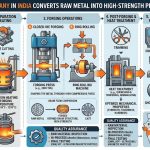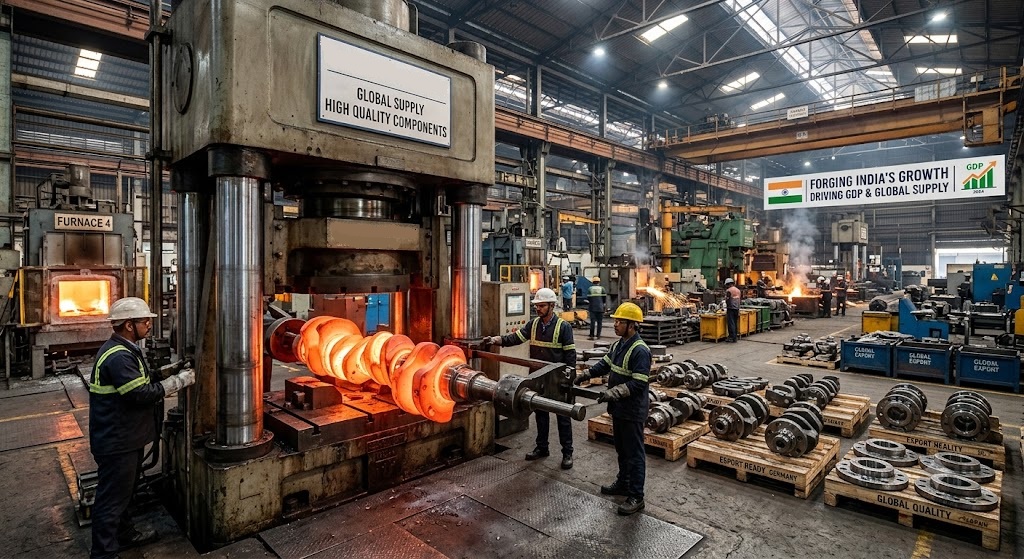

Modern day forging foundries in India utilize large amounts of various types of cutting edge equipment such as hydraulic presses, mechanical power presses, upset forging machines, drop hammers, ring rolling mills, induction heating furnaces, CNC machining centres, heat treating furnaces and automated material handling systems. These tools allow them to produce very high strength forged parts with highly accurate dimensions and excellent mechanical properties. An advantage of advanced forging tools over traditional forging tools includes a very efficient production process, significantly improved dimensional accuracy, significantly superior surface finishing, lower waste of material, improved safety for workers, lower energy usage and a consistent level of product quality (all products are manufactured to meet international standards). By using advanced forging technology, an Indian forging foundry can produce complex products for automotive, aerospace, oil & gas, power generation and heavy engineering markets while remaining competitive with other manufacturers globally.
How Forging foundry India is necessary for increasing nation’s GDP
The Forging foundry India will help improve the GDP of India through an increase in production jobs, and by supplying component parts that are required by the automobile, rail, power, oil and gas, and heavy equipment manufacturing industries. Indian forge manufacturing companies have the opportunity to generate additional income for India through their export of products to foreign markets. The abundant amount of raw materials and proximity of India’s major sea ports will allow Indian forge manufacturing companies to produce and export their products at a lower cost than if they were located elsewhere in the world which will continue to enhance India’s status as a manufacturing centre for global business and enhance the economy of India.
What does forging foundry produces? How does it manage to supply the global needs for forged components?
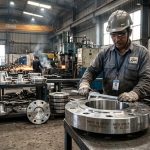
A forging foundry creates a variety of strong components like flanges, shafts and rings and other parts with high strengths. These components are used in many industries, including automotive, manufacturing, aerospace, oil & gas, power generation, transportation and heavy engineering. To meet the global demand for forged components, the forging foundry uses advanced machines for manufacturing forged parts and employs a variety of automated processes and quality assurance systems. The forging foundry has a large number of workers trained to ensure that they provide customers around the world with both precision products and reliable delivery.
Conclusion
A forging foundry located in India has rapidly developed into a key component of the Indian manufacturing sector through implementation of modern machines and technical advancement in production methods for the creation of high-quality forged parts for diverse global markets. As a result of their ability to provide high-quality, high-volume, and internationally compliant products, forging foundries are also one of the leading contributors to India’s overall gross domestic product (GDP) by creating jobs for citizens of India, providing export opportunities, and using raw materials and ports efficiently. The ongoing supply of precision-engineered products to a variety of customers by Indian forging foundries helps to strengthen India’s position as an attractive and dependable centre for manufacturing forged products and is a fundamental factor for continued industrial and economic development in India.