
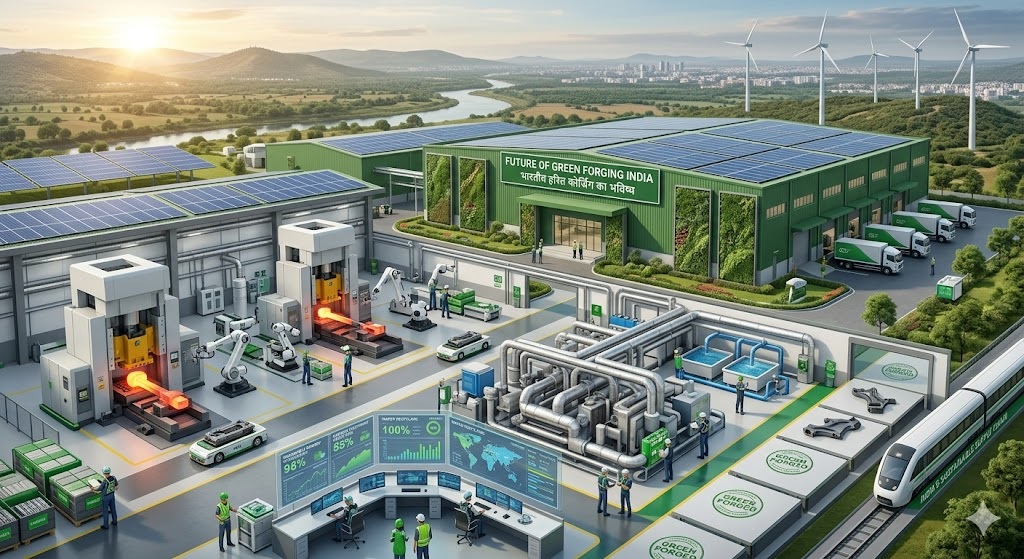

Forging has long been an important factor in developing an industry, including automotive, aerospace, rail transport, oil and gas, and heavy engineering. Traditional forge methods use a great deal of energy (to heat the metal); produce much waste (materials); and generate many greenhouse gases through their processes. Thus, to combat the environmental issues associated with traditional methods, businesses are looking for ways to replace traditional methods of forging with methods that are considered to be more sustainable. Green forging is emerging as a new technology that many forged manufacturers in India must take advantage of to remain relevant in today’s marketplace.
Green forging is environmentally friendly forging procedures used to limit pollution, decrease waste and conserve energy whilst maintaining the quality of production. The green forging industry is predicted to be the future of manufacturing in the Indian forging sector as the industries are becoming more sustainable.
Understanding Green Forging in Manufacturing
Fossil fuels have been used for heat in traditional forging processes for many years, and unfortunately this has resulted in large amounts of carbon emissions and industrial waste, due to the use of old hydraulic systems and inefficiently produced products. Thus, the use of clean, smart, and energy efficient technologies are now being employed to replace these old methods with newer technologies (e.g. Induction heating, use of renewable energy, advanced die design, automated presses, and recycling of scrap materials) to allow forgers to reduce their operational costs while supporting the need to protect our environment. Forging Manufacturer India must adopt green forging to stay competitive in the global marketplace as this is a must to continue to compete long-term.
Role of Energy-Efficient Technologies
A major factor contributing to both pollution in forging is the overuse of energy. Traditional furnace heat tends to use a great deal of energy and adds additional carbon to the environment. A better way to forge is to promote the use of induction heating as a method to heat the forging material quickly with better temperature control and lower energy use.
In addition, modern day forging manufacturers in India are investing in servo-driven presses and automated forging machinery that minimizes idle machine time and maximizes production output. Not only do these technologies save energy but also improve accuracy and decrease the amount of rejected products.
Therefore, forging companies in India can become more sustainable and also increase their profit margins by producing using energy efficient methods.
Use of Renewable Energy in Forging Plants
The success of forging into the future will be based largely on the inclusion of alternative forms of energy, such as wind and solar, into the process. Many forge shops are installing solar panels on their roofs in order to run their machines off solar energy instead of traditional electrical sources daily.
Using renewable forms of energy will greatly reduce an organization’s operating costs while also helping to ensure compliance with worldwide environmental laws, which are becoming more stringent all around the world. In addition, it will greatly enhance a forge’s value when it comes to selling into export markets to buyers who are seeking eco-friendly suppliers.
By making this change, India’s forging manufacturers will become much more appealing to industries worldwide that are looking to their supply chains for sustainable sources of raw materials.
Material Optimization and Waste Reduction
Green forging provides a reduction in waste from raw materials as a result of improved process planning and precise manufacturing methods. Near-net-shape forging is an example of how forged components can be produced nearer to their final dimensions. By reducing the amount of parts that require excessive machining, the amount of waste created through the forging process can be reduced. In addition, advanced simulation software allows manufacturers to optimize die design and metal flow prior to starting production, which reduces the amount of trial-and-error processes, decreases scrap generation, and improves the use of materials.
For Indian manufacturers of forged products, green forging provides an opportunity to improve resource management and improve production efficiency.
Recycling and Circular Manufacturing
Encouraging recycling helps establish sustainable green forging methods to improve the usage of the metal scrap produced during the production process. Scrap metal can be recovered, processed for reuse in future production cycles reducing the need for fresh raw materials and minimizing mining and metal extraction-related environmental impact.Water recycling systems and pollution control units are now being established as standard practices in the majority of forging facilities. The new developments result in improved production safety and compliance with environmental rules. Circular manufacturing will help create a better future for forged metal production in India.
Government Initiatives and Industry Standards will help improve the use of sustainable manufacturing by forging manufacturers in India. The Indian Government has developed several programs (e.g., “Make in India”, initiatives for energy efficiency, and regulations governing the environment) to promote sustainable manufacturing practices. Financial support for energy-efficient machinery and clean production systems is also supporting rapid modernization of manufacturing systems.
Customers around the world are looking to partner with ISO-certified environmentally responsible companies, so to compete in the global economy, Indian forging manufacturers must comply with these demands by investing in green manufacturing processes. Therefore, green forging is both an environmentally conscious approach to manufacturing as well as a sound business decision.
Future Scope of Green Forging in India
The prospect of green forging progressing in India is very encouraging since as organizations will show an increased concern for the environment and reducing carbon emissions. There are many high-performance forged components that the developing industries will need for producing electric vehicles, renewable energy systems, defense manufacturing, etc., and they want these parts manufactured in a manner that is responsible with the environment.
The continued advancement of technology and growing awareness in the market will see more and more forging manufacturers changing to low-emission production methods. Also, the use of automation, Artificial Intelligence (AI) to monitor production processes, and smart factory solutions will all help deliver improved energy efficiency and improved environmental performance through the entire production process.
The end result of this transformation will be to establish India’s forging manufacturers as worldwide leaders in sustainable heavy engineering and precision manufacturing.
Conclusion
The future of India’s Forging Industry is represented by Green Forging embracing both Environmental Responsibility and Industrial Efficiency. There will be a decrease in Carbon Emissions as well as Energy Savings, Waste Reduction, Improved Long-term Profitability. Forging Manufacturers in India will be required to continue investing in environmentally friendly technologies and processes to meet the increasing global demand for environmentally friendly and smarter manufacturing processes. Companies that are proactive about using green forging technologies today will not only be a leader in manufacturing tomorrow, but they also will help create both economic and environmental advancements.


