
It still comes back – that smell, sharp like burnt wires and rain. In 2018, I was running final tests at a big data hub in Bengaluru. Power-up nearly done, we laughed, slapped shoulders, ready to go live. A junior tech lifted his chin toward the wiring rack instead; a wisp of dark fume twisted upward, slow as breath. Not fear – something colder emptied my chest.
Not only the procurement team, who might be considered as just trying to be heroes of the project, had gone for a “value-engineered” choice of low-voltage lines but with the COC (Certificates of Conformity) in their hands and gleaming brochures in the eyes. Lighting of the cables by the burning test was not so much power running through them but the heating elements akin to the giant ones were being formed by the cables. Rewiring with a fresh cable of three kilometers was the result. The “savings” of four lakhs turned into a twenty-lakh nightmare and a two-month delay.
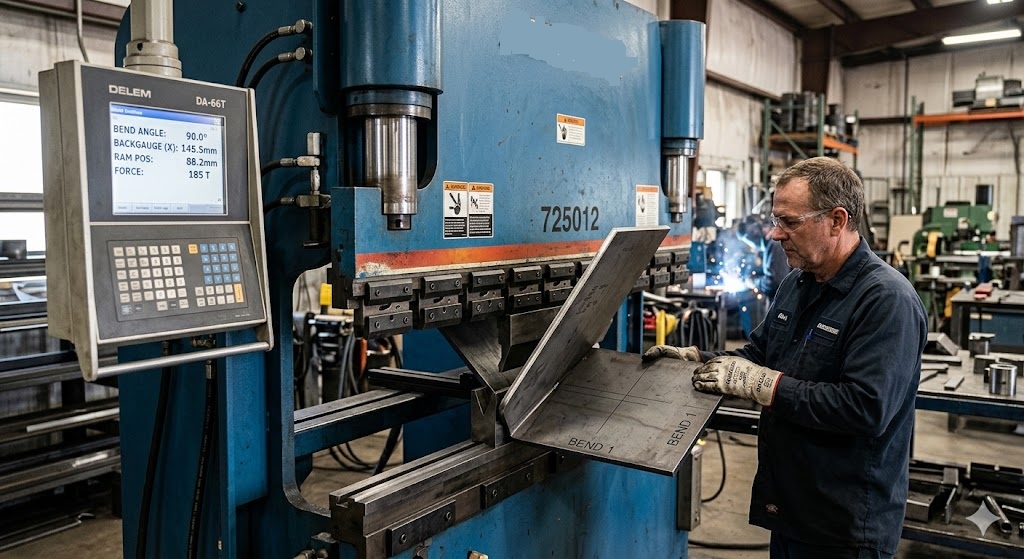
That’s the thing about the Indian market. It is lively, enormous, and the manufacturing hub is probably one of the most sophisticated ones in the world, but unfortunately, it still has its pitfalls too. One’s finding the best Press Brake Machine Manufacturer shouldn’t be about getting the lowest quote but the one who will surely save your project from burning down.
Phase 1: The Technical “Non-Negotiables” (Beyond the Brochure)
Setting price as the first criteria is a mistake as one should start with exploring the technical baseline before. It is beyond the usual copper and plastic scenario in the case of cables, isn’t it? On a market where a wires and cables manufacturer in India might be a global giant or a small workshop, the “how” even matters more than the “how much.”
1. The Purity of the Conductor
For the Electrolytic Tough Pitch (ETP), the copper used for residential or high-end commercial projects must be with the grade of purity as that of the highest levels of copper. Why? Because cleaner copper has lower resistance. If a manufacturer is vague about their copper sourcing, run.
- The Evolution of Insulation
Far behind us now – those days of relying solely on PVC. Think about busy spots like offices, clinics, or server rooms; they demand more than what old materials offered
- Fire-resistant stuff just barely stops flames from spreading. What you get is basic protection – nothing fancy.
- Smoke stays low when flames hit – good news on Indian job sites where FR-LSH cable runs. Toxic gas drops off fast, even as things get hot, because the material fights back without feeding poison into the air.
- Smoke stays light when HFFR works. Without halogens, it slows fire just enough. Now seen across transit systems where clean burning matters most. Cities building new networks choose this path more each year.
Phase Two Certification Challenges
- Start strong with trust. Certifications across India act like guards at the gate, not paperwork hurdles some assume. Instead of seeing them as slow delays, picture outside proof a maker won’t skip steps, risking how safe you feel. Proof matters when shortcuts could cost too much.
- Start here – the BIS or ISI mark matters above all else. Nothing changes that. A stamp like CE, VDE, or UL means tighter rules were followed during making. When an Indian cable maker sends products to Europe or the US, those lab. Out there in India, every electric gadget has to clear tests from the Bureau of Indian Standards. Think about IS 694 – that rule covers PVC-insulated wires up to 1100 volts. Missing a sticker? Catch one where the license number isn’t live anymore? Game over. Conversation ends on the spot.
- els often come along. Meeting global expectations shows up right there on the insulation. Proof of strict production isn’t always obvious – unless markings give it away. Export paths reveal a lot about how carefully things are built.
- That certificate on the wall? It means every batch runs like the one before, so drum number hundred matches the very first. Not luck. A way built to hold steady.
Phase 3: Vetting the “Factory Floor” Reality
To truly vet a wires and cables manufacturer in India, you have to look at their “muscle”.” Printing beautiful catalogs is simple whereas companies with strong and effective factory floors produce cables consistently meeting standards and thereby build trust.
Automation and Consistency
Cable manufacturing at present is a very high precision process. You need to focus the companies that are implementing highly accelerated extrusion lines that are controlled by laser as the diameter of the cable is monitored. This technique results in a uniform thickness of the coating. If you see a “wavy” or bumpy insulation, it may be the case that a short circuit is just waiting to happen.
The NABL-Accredited Lab
Does the manufacturer have an in-house lab? Even better, is it NABL-accredited? The top-tier players like Polycab, Finolex, or KEI don’t simply “hope” the cable is good; they take the samples to various tests like “Ageing Tests, ” “Cold Bend Tests, ” and “Smoke Density Tests.” The partner that you want is the one who treats every batch as a critical mission.
Phase 4: The Speed and Scale Equation
While ‘speed to market’ might not be the whole story, it is definitely a crucial factor in the B2B world. The ability to act swiftly and decisively without hesitation is what separates the leaders from the followers.
Ask yourself these questions, if you enter into business with a wires and cables manufacturer in India:
- What happens when demand grows? One local supplier could offer a solid deal on half a kilometer of material. Yet delivering fifty times that amount for an entire housing zone – will corners start getting cut then?
- When copper and aluminium costs swing wildly, stability matters. A maker with its own rod production might handle shocks better. Some rely on careful price safeguards instead. Imagine your shipment scrapped just because metal climbed five percent overnight. That kind of risk hides behind suppliers without backup plans.
In my experience, electrical work alone cannot be stopped by cable interruptions; it can stop drywalling, painting, and IT setup as well. Without a cable supply, your site will grind to a halt and the consequences cannot be underestimated.
Phase 5 Cheap Cable Risks
True, money’s tight these days. Some players out there charge way less – twenty, even thirty percent below top brands. Yet here’s the thing: what lets them cut prices so deep? Same stuff goes into their products as the others. No magic involved.
Watch Out for These Common Shortcuts
- Smaller wires than advertised might be hiding in plain sight. A cable said to be 2.5 square millimeters could really measure just 2.2. Less copper means lower costs for makers, yet higher danger for users. Resistance goes up because there is less metal inside. Fire hazards grow without warning signs showing first.
- Old copper bits get melted down again – yet they keep flaws from before. Because of those, electric flow drops a lot.
- Peeling back the layers – less plastic means lighter insulation. Looks okay at first glance; won’t survive a spike in power. Shrinking the coating cuts material, sure. Passes eyesight exams easily. Breaks down when electricity jumps high.
To give yourself an upper hand, you should always keep a close eye on the test report and certificate of every batch delivered to you. Testing the quoted conductor resistance against IS 8130 at 20°C is one of the most effective ways to compare and evaluate
Phase 6: Aligning with Future Trends
Today India is evolving Green, Digital and Fast. A future-oriented wires and cables manufacturer in India should be in a conversation with you about:
- Solar Cables: Since India’s aim is to achieve a 500 GW renewable energy target by 2030, there will be a need for DC cables that are capable of withstanding UV exposure for 25 years.
- EV Charging Infrastructure: Cables specially designed to handle high-current loads as well as frequent handling should be the ones you are looking for.
- Smart Grids: Fiber optics integrated cables for real-time data transmission.
Your manufacturer, if only producing the same “house wire” as 1995, they might be not the right partner for your 2026 project.
The Final Reflection: Trust, but Verify
Choosing the right Press Brake Machine manufacturer is not a “set it and forget it” situation. It’s a partnership. You want a manufacturer who performs after-sales support quite well, one who would be able to help your site engineers by giving proper bending radii assistance or even the termination techniques.
At the end of the day, the cables you decide to use not only define your reputation but also ensure the safety of your building. Don’t compromise today for a 5% saving and end up with a 500% liability tomorrow. Follow the standards, audit the factory, and give importance to quality rather than “the deal.”
Honestly, it just seems to me that in a country building as fast as India, we can’t afford to cut corners on the backbone of our infrastructure. So, take a breath, do the audit and power your project with confidence that only comes from real quality.