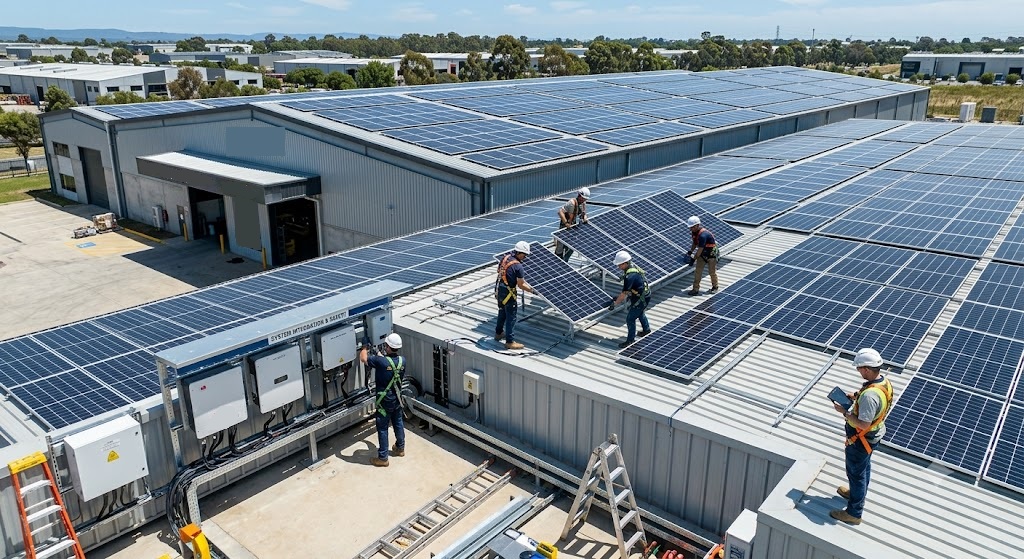

Commercial solar systems are solar power systems intended for business users, organizations, stores, offices, industries, and commercial structures. These solutions enable the owners of commercial real estate to harness electric power of sunlight and decrease their reliance on traditional grid electricity. Commercial solar systems are usually designed according to the electricity consumption of the premises, the size of the installation space, the roof type, etc. In this article we will explore the complete guide for commercial solar power installation, and why we need commercial solar power solution.
What Is a Commercial Solar Power Solution?
A commercial solar power solution is an individual electricity generation system. It is designed after inspecting the site and analysing energy consumption. Solar EPC companies study the electricity consumption of the property, the rooftop specifications, and sun and weather conditions before designing the system.
The process includes a lot of planning, designing, choosing equipment and so on. The system may also contain some batteries for the backup power source depending on the requirements. Therefore, organizations are able to control their power requirement properly and reduce their monthly costs.
Main Components of a Commercial Solar Power System
The commercial solar electricity system is primarily made of solar panels with photovoltaic cells that receive sunlight and produce electricity. Different solar panels are plugged together to obtain the needed capacity.
After a solar battery installation in the system, the excess electricity can be saved for future use. After that, the battery can provide direct electricity to the inverter that changes DC electricity into AC electricity to be applied in the commercial appliances or equipment.
There may be additional parts involved in designing the solar energy system according to its specifications, including combined structural support and connections, cable sets, protection devices, metering and control devices, etc.
How Can Commercial Buildings Use Solar Electricity?
Electricity is needed in many activities of commercial buildings. These include, but are not limited to lighting, computers, laptops, fans, refrigerators, water purifying machines, water-cooling systems, ACs, pumps and commercial equipment. The well-designed commercial solar installation can do away with a lot of these electricity needs. Businesses can be using solar energy during the day, while stored energy can be used for backup in case the solar energy system includes battery storage.
Commercial Solar Power Installation Services
Commercial solar power installation refers to an all-inclusive service that is offered by solar EPC companies. The services rendered can include site inspection, energy consumption analysis, system design, engineering, installation, equipment procurement, and testing. Proper planning is crucial since various commercial properties have distinct electricity loads and installation difficulties. EPC companies can evaluate the available rooftop or ground space and develop the solar solution necessary for the energy needs of the property.
Factors Affecting Commercial Solar Power System Cost
Several factors determine the price of commercial solar power systems. The capacity of the system is the major factor. Generally, a commercial solar power system, which requires more electricity, will consist of a larger number of water proof solar panels and relevant equipment. Availability of rooftop space and amount of sun exposure will also play a crucial role in the design. When the roof has adequate usable space and enough sun exposure, the conditions for installation of solar panels would be favourable. The distance from manufacturer or supplier of solar equipment to commercial site can influence the logistics and transportation cost. Other aspects include mounting structures, inverter capacity, battery storage, electrical upgrades as well as requirements for installation and maintenance services. Before working out the price of their project, companies should check the existing governmental programs and eligibility requirements. There may be different subsidy opportunities depending on particular program type, type of system, category of the consumer and state policies.
Conclusion
Commercial solar power solutions are a means of generating solar power for business application. The system is configured according to the site’s unique characteristics and energy consumption needs. Thus, lighting, computers, cooling equipment, appliances, and related commercial equipment can be powered by solar energy. Companies that cooperate with a reputable solar EPC provider will be able to arrange, install the system, store the energy produced and plan the electrical power needs in accordance with its operations and future expected savings in electric bills.