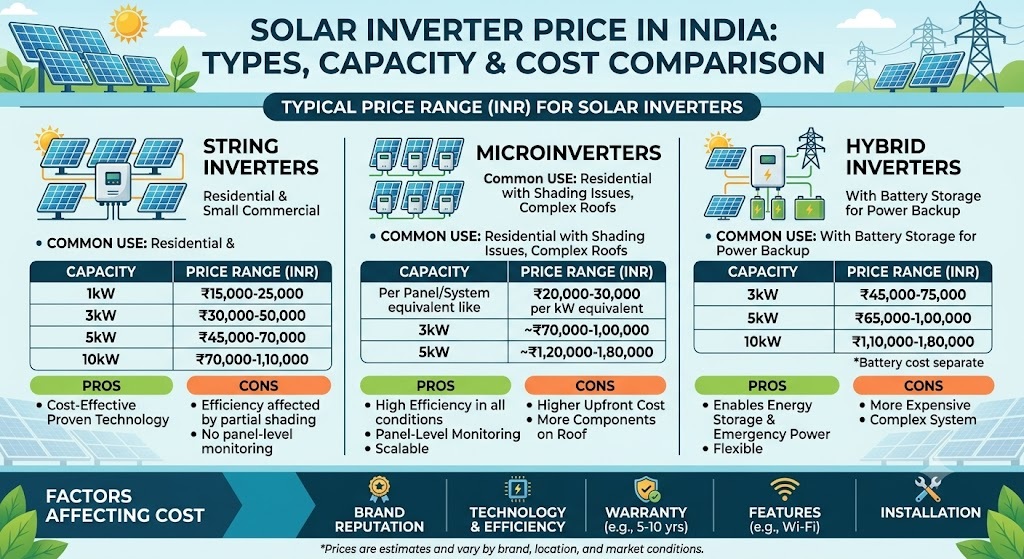

Honestly, choosing a solar inverter in India is almost like finding a needle in a haystack, a gigantic, rapidly expanding, hyper-competitive haystack being the context. Because there are so many players, technical terms that no one understands flying around, besides quality claims that don’t always stand up… it can leave you a little confused and disoriented.
I recall a new installed system I was involved with a few years back. It was a medium-sized setup for a business tech hub, pretty big server farm, tight deadlines, the usual stuff. The procurement team, bless them, had gone for a “cheap” inverter option. It wasn’t a leading brand, but it had the required certifications, so I said, “Well, a bit risky, but the savings in cost are really great”.
Six months later. We were testing the load when part of the cable tray got so hot it’s almost unbearable to touch. I mean seriously hot. The inspection revealed that the conductor purity was not up to standard and the inverter was actually very inefficient at peak load. We had to stop everything. That little initial saving? It was returned ten times over in downtime and maintenance hassles.
That event really determined how I perceive top-notch work. Quality is not just a trendy word; it is the very groundwork of your electrical installation. Whether you are a homeowner trying to reduce your energy bills or a factory owner focusing on long-term ROI, the first step towards a system that really works is grasping the solar inverter price in India.
Why 2026 is the year of discovery for solar power in India
2026 is more or less the year when everything has come through for those who have been hesitant. A lower barrier to entry because of falling technology costs, and aggressive government support, has never been the case.
The Indian government doubled its commitment in programs such as PM Surya Ghar: Muft Bijli Yojana with 2026 budget earmarking a whopping ₹220 billion for Residential Solar alone. The game-changer here is that we are witnessing a real “execution” on the ground besides just “providing incentives”.
But here’s a catch: although the solar inverter price in India has stabilized, the market is still an eclectic mix of sophisticated global manufacturers and a vast unorganized sector where everything can be done at the cheapest possible cost. Your mission is to be brutally faithful to verifiable standards.
Solar Inverter Price in India Dissected by Type & Technology
A single inverter won’t fit all jobs. The lowest-priced unit might fail when running powerful air conditioners. Think of it like dropping a small scooter motor into a large truck – makes no sense.
- Grid Connected Solar Inverters
- Most people living where electricity never quits go for these. Sunlight lands on roofs, houses grab that energy – leftover power slips into the grid by way of net meters.
- Priced around ₹19,000 for just one kilowatt, but watch that number stretch near ₹90,000 at ten. Smaller versions keep things light in cost – bulkier builds load up on parts, so numbers rise. Total amount tied closely to size; ramp it up, bills follow. Not everyone expects such a spike, still every boost adds real power. Fees move forward slowly, meter by watt, model after model.
- Aim here is saving on electricity – think reductions of 70 to 90 percent. Bills shrink when usage drops sharply. This fits anyone tracking monthly spikes closely. High charges fade if habits shift just right. Energy waste slips away with smarter choices. Savings grow without needing new gadgets everywhere. Quiet changes add up fast behind the scenes.
- A small rooftop setup around 3kW works well with dependable gear – try inverters such as the Luminous NXi line or models from Eastman’s Link range. These options bring reliable performance without stretching your budget.
- Off-Grid Solar Inverters
- Sitting alone in remote spots, such setups run purely on battery power instead of outside connections. Away from urban centers, these units perform reliably even when power grids go down.
- Starting around ten thousand rupees, entry-level versions sit on the lower end. Meanwhile, beefier setups – like a full 10kW unit – push prices close to one lakh thirty-five thousand.
- Watch out. Battery match matters every time. That low-cost standalone system? Could fail with today’s lithium-ion cells. Check fit before assuming it works.
3. Hybrid Solar Inverters
At the moment, these are the “love of the market” of 2026. They are a wonderful compromise between the two extremes as they offer grid feed as well as battery backup features.
- Price Range: Very high, starting at ₹75, 000 for a 3kW unit and going up beyond ₹2, 39, 000 for a 10kW three-phase unit in the higher end of the spectrum.
- What is the point of spending more? Because they come with unmatched flexibility and “future-proofing”.
Capacity versus Cost
The biggest misconception is in understanding capacity; people think it is just what you need now, however, it is also what you will require three years from now when you finally get that EV or add another floor to your home.
| System Capacity | Home Type/Usage | Estimated Inverter Price (2026) |
| 1kW – 2kW | Small apartments, basic lighting/fans | ₹19,000 – ₹25,000 |
| 3kW – 5kW | Standard 3BHK, includes 1 AC & Fridge | ₹30,000 – ₹55,000 |
| 7.5kW – 10kW | Large homes, multiple ACs, small offices | ₹75,000 – ₹1,35,000 |
| 20kW+ | Industrial/Commercial use | ₹95,000 – ₹3,00,000+ |
“Secret Sauce”: Which is Better Technology MPPT or PWM?
In your quest to buy a Solar Inverter Price in India, you would have come across an abundance of abbreviations. To me, it still looks like many buyers neglect this point and end up saving only a few thousand rupees. This is a mistake.
- PWM (Pulse Width Modulation): It’s the classic, good old tech. It’s cheaper indeed, but its efficiency is only about 70%.
- MPPT (Maximum Power Point Tracking): This is the new standard. Its efficiency can be as high as 97%.
Summary: For systems over 1kW, never buy PWM! Efficiency gains mean that you get more electricity from the same number of panels, the difference will cover the cost of a more expensive inverter in just a couple of years.
Great tips: Steps to take when vetting a manufacturer
The solar inverter price in India is a very alluring factor. Prices can go so low that the temptation is very strong. But remember my “hot cable” story? You want a partner, not just a supplier.
- BIS and ISI Certifications should be checked: These are mandatory for the Indian market.
- Find out the Efficiency Ratings: An ideal inverter has peak efficiency over 97%. The 2-3% difference will not sound much, but a total 25 years’ lost energy will be enormous.
- Remote Monitoring is also a nice-to-have feature: These days you can check your power generation even from your phone. Eastman and Luminous are two brands that have an app to do this.
- Check Local Service Network: Do a call to their customer service before you buy. If they can’t even pick up the phone on a heat wave day in June now, what will happen to you in your black-out?
The Unseen Charges
People often talk about the solar inverter price in India but forget the “extras”.
- Labor: Don’t be tricked by a local electrician who knows how to work only with a screwdriver. You should hire a certified solar installation team.
- Safety Equipment: Surge protection devices and proper earthing are essential. Don’t be surprised when your inverter gets fried after the first thunderstorm if you decide to take shortcuts here.
- A handful of leading companies offer coverage lasting five up to ten years. Twelve months beyond that mark? Some charge a little more for the jump. Fifteen shows up now and then, if you’re willing to pay. Thousands stretch across the cost – quiet comfort follows.
CONCLUSION
So, to cut a long story short, the Indian solar market is like a kaleidoscope full of worlds, first-rate technologies coexisting with some incredible “jugaad” solutions that would barely survive a single summer.
Don’t let a small price difference lure you into compromising the very foundation of your energy independence. That little initial saving is almost guaranteed to be paid back in higher bills and maintenance nightmares down the line.
Pick a manufacturer who will invest in their product so that you can invest in your future. It’s a bit dramatic, I know, but your solar success really does depend on the quality of that box on your wall.
Firstly, come here with your questions and we will get back to you promptly. Besides, whether you are checking out the Solar Inverter Price in India of a small home or a big factory, remember: buy once, buy right, and then let the sun do the rest.