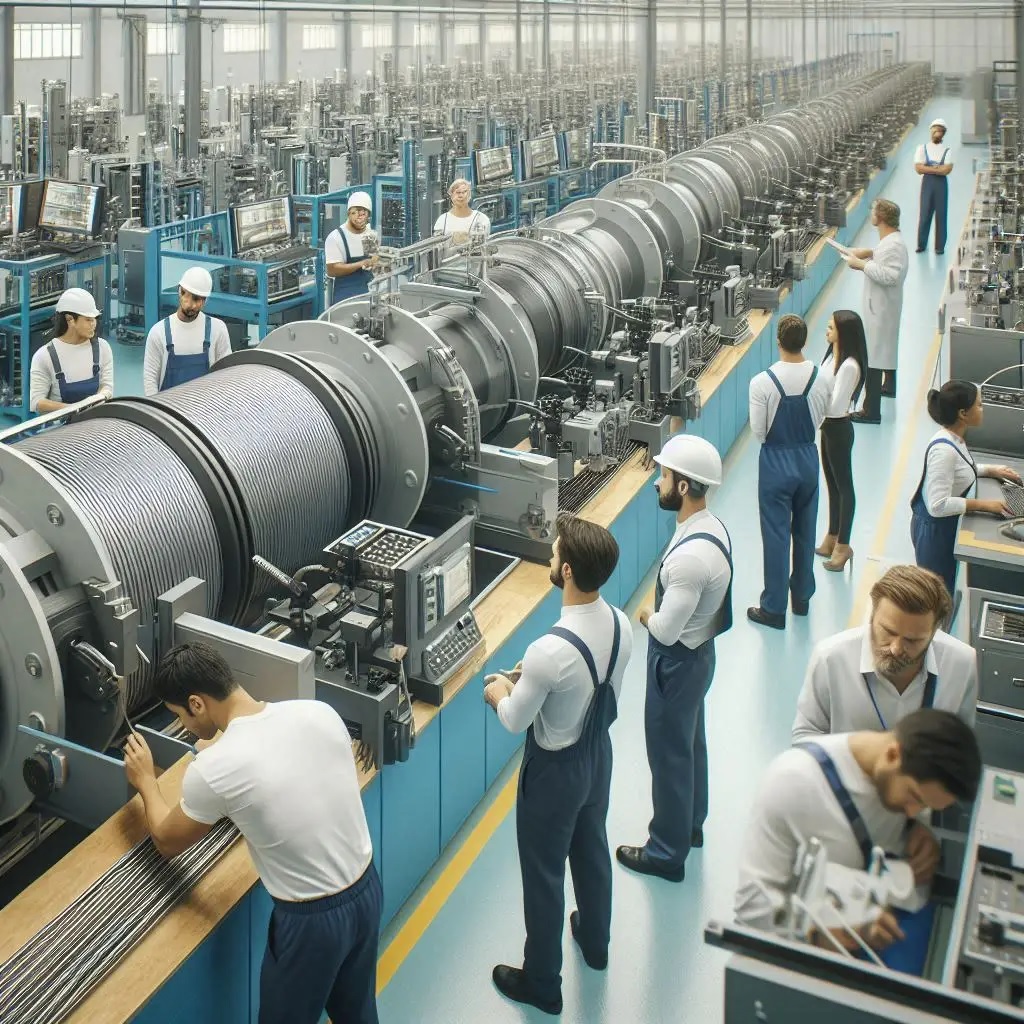

With the rise of agriculture, irrigation, and water management systems, the need and use of submersible flat cables have been continuously increasing. Designed to supply power efficiently, flat cables connote a safe application with motors and submersible pumps submersible applications of all kinds. The manufacturing of submersible flat cables is important part of an industry which served the test of time for reliability, safety and suitable applications where standard wires and cables will not work.
Importance of Submersible Flat Cables
In a variety of agricultural applications, borewells, drainage systems and industrial situations involving pumps in or near water, submersible pumps are used. The flat shape of submersible cables not only allows easy accessibility and simple installation in boreholes, but prevents tangling when in operation. Cables are insulated with PVC or XLPE to enhance abrasion, chemical, and moisture resistance, resulting in a long service life, even in difficult existing environments.
Manufacturing Excellence
Manufacturers of submersible flat cables exercise rigorous quality control to ensure that their products will perform satisfactorily in tough environments. They use high-quality conductors made from electrolytic grade copper or aluminum that provide good conductivity and efficiency. Conductors are insulated with specially formulated PVC or XLPE insulation to protect from heat, water, oil, and chemicals. All batches of cable are tested for durability and endurance (voltage endurance, insulation resistance, and flexibility test) so that you can be sure that all our cables will last for many years. The products conform to ISI, ISO, and international standards, meaning they meet international benchmarks and consist of quality products suitable for domestic and export usage.
Applications Across Sectors
Submersible flat cables are utilized beyond agricultural applications, becoming a key component in many industries. In agriculture, they are used to power pumps on irrigation and borewell systems. In municipal water distribution, they are also used for constant pumping to enable reliable water distribution. Factories, refineries and processing industries are other examples of installations that use submersible flat cables in heavy-duty systems. Their rugged and durable design also makes them suitable for wastewater and drainage systems, where they provide most reliable power source for sewage and dewatering pumps subjected to demanding and moisture-laden operating conditions.
Growth Drivers for the Industry
A number of factors are contributing to the consistent advancement of submersible flat cable manufacturers globally. The increased need for efficient irrigation systems in Agriculture is creating a constant need for durable and reliable cables to power submersible pumps. Conversely, growing urban water supply and sewage management programs are generating additional requirements in municipalities and industry. As renewable energy and renewable energy technologies–particularly solar pump sets–gain acceptance, there is heightened demand for specialized submersible cable.
Challenges and Opportunities
Submersible cables are made up of non-corrosive material like copper or aluminum. These metals are ductile, malleable, and can be drawn into wires or cables easily as per unique requirements. But like any other industry, opportunities abound with specialized items such as flame-retardant submersible cables, solar pump cables, and sustainable insulation materials. The investment in water management and Agri-tech sectors by India and numerous other nations suggests a further increase in demand.
Conclusion
Submersible Flat cables manufacturers are a vital component in delivering reliable water systems in agriculture, industry, and infrastructure. Manufacturers build quality, durable, and innovative products to assure pump and motor operation under some of the most difficult operating conditions.
As the needs for irrigation and water management continue to rise globally, the manufacturers of submersible flat cable will continue to grow in importance in relation to creating effective and sustainable solutions.