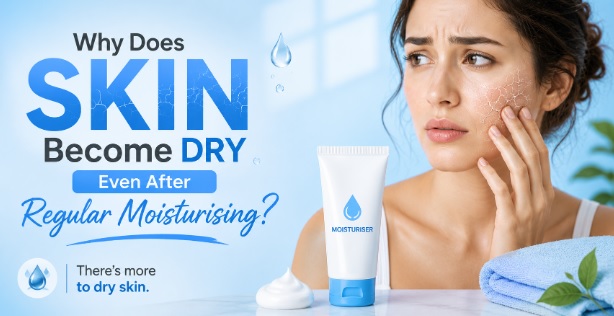

Have you observed that your skin stays dry even after applying moisture consistently? There is a wide population that goes through it. This might also have to do with the damaged barrier and the quality of the moisturiser.Â
The choice of moisturiser may also depend on the skin type and concern. There are different requirements for ingredients for moisturisers for dry skin, normal skin, and oily skin. What works best for one might not suit others.Â
Propylene glycol cream is a widely accepted and used product for dry skin moisturisation. Knowing the reasons for skin type behaviours will help you to select the proper moisturising product for dry skin and establish a skincare routine.Â
Why does skin feel dry even after moisturising?
The function of the skin barrier is to keep moisture in the skin and avoid irritants from entering the skin. Once it gets compromised, it can result in greater water loss than gain.
- Excessive soap or cleaning.
- Low humidity or even coldÂ
- Skin barrier issues due to ageing
- Using/applying a moisturiser that is not suitable for your skin type
- Any underlying skin conditions, such as eczema
- Using harsh chemical exfoliants can damage the skin.Â
And for this, your moisturiser might not be doing enough
What should you look for in a moisturiser for dry skin?
There are various products available for people with different skin types, and some products are targeted to those with different skin issues, including ingredients that work for their skin. Likewise, if you’re using a regular moisturiser, it may not be sufficient for dry skin. A moisturiser for dry skin should contain ingredients like :Â
- Humectants
- Emollients
- OcclusivesÂ
Why propylene glycol is used in a moisturiser?
It is used in products for its ability to retain moisture in the skin
Some of its benefits include:
- It helps maintain skin hydration.
- It helps make the skin look better, hydrated, and firmÂ
- It supports better absorption of active ingredients
- It also reduces water loss from the skin’s surface
- For all of these properties, propylene glycol for skin is a highly preferred active agent in moisturisers.Â
Like any other active agent, you should make sure to take a patch test before applying or bringing it into daily use.Â
Are you applying moisturiser the right way?
The dry skin you have may also be because you’re not applying either the right type or the right amount. Below are some easy steps that will benefit you:
- Use it on moistened skin: It is best to apply moisturiser after washing your face or bathing, when your skin is still slightly damp, to retain moisture in the skin.Â
- Use enough product: Applying less product can lead to reduced coverage and thinner layering, thus nullifying the whole purpose of it.Â
How to choose the right moisturiser for dry skin
When getting a moisturiser for summer for yourself next time, keep these points in mind as a reference for what to look for in products to improve your skin.
- It must contain a humectant that can be glycerine or propylene glycol
- Barrier-supporting agents like ceramides should be presentÂ
- They offer long-term hydration to avoid re-application
- Should not be comedogenic in nature
- If you have sensitive skin, then you should avoid moisturisers with particular fragrance.
- Read the ingredient label carefully if you have any other skin condition.
How to choose the right moisturiser for oily skin
If you have oily skin, you can use these tips as a guide to the features you should find in products to enjoy better skin.
- It should be a lightweight gel or water-based formula
- Look out for non-comedogenic labels on the products
- The ingredients that regulate excess oil can be searched for and found in products such as niacinamide.Â
- If you suffer from any specific skin problem, like acne, try to find certain components or contact your dermatologist.
Habits that can make dry skin worse
You may be unknowingly doing certain things daily that are stripping your skin’s moisture away:
- Taking hot showers for longÂ
- Washing your face too frequently
- Using cleansers with strong agents Â
- Not applying moisturiser after cleansing
- Spending a long time in cold environments or ac
- Not staying hydrated
When does dry skin signal something more?
If you observe occasional dryness, it is rather common, but if you observe a persistent dryness even after using moisturisers consistently. You should consult a doctor if you observe any of these symptoms:
- Red and inflamed patchesÂ
- Thickening of skin
- Bleeding or painful cracksÂ
- Pruritis
ConclusionÂ
Dry or flaky skin for a long time may indicate more than just the absence or use of appropriate moisturisers. This can also signal that your skin barrier is a little damaged and needs better support. Your routine needs different agents and slight adjustments to fit your skin better.Â
The quality of products that you’re using also matters to a certain extent. There are many platforms that provide good-quality products at affordable prices, such as Zeelab, 1mg, Apollo, and Pharmeasy. These platforms also provide you with skincare essentials based on different skin conditions.Â
What really counts in the end is the consistency of application of moisturiser and internal hydration of skin. If you just do that much, you can avoid the discomfort of having dry, itchy and flaky skin.Â