
The bigger the rooftop, the bigger the urge to put as many solar panels on it as possible. More panels means more electricity, and more electricity can mean cutting costs. There is, however, a significant caveat to this argument – the power consumption of the house itself and the potential use of any surplus.
A well-planned Residential Solar Rooftop System begins with the actual electricity consumption rather than the square meters of the rooftop. This makes efficient use of the generated electricity, avoids the unnecessary expenditure on equipment, and provides the best value for the homeowner’s investment.
The Size of the Roof Is Only Part of the Equation
The square meters of the roof are only part of the equation when it comes to the size of the solar installation. A home that only consumes 12 units of electricity daily can have a rooftop that can accommodate a 10 kW installation. It is nevertheless necessary to put only as many panels as needed for the house and its consumption pattern.
If the house uses the majority of its electricity in the mornings and evenings, a large installation will generate significantly more power than the home can consume during the day. This surplus either goes to waste or is sold at a loss, depending on the particular circumstances of the owner and the applicable regulations. Thus, a good load assessment becomes an integral part of the planning, with the rooftop area entering the picture only afterwards.
The Load Determines the Value of the Investment
It is possible for two homes to have a virtually identical electricity consumption yet require significantly different solar installations. The difference can be explained by the time of the day when electricity is being used.
Air conditioners, fridges, water pumps, washing machines, and various other appliances, consume significantly more electricity during the day than at night. If the appliances are being used while the sun is shining, the best way to cover the load is to install a larger solar installation. A home that uses the majority of its electricity after sunset, however, will not be able to benefit from the extra capacity.
The evaluation of the potential installation, therefore, should consider the following factors:
- Average monthly and daily electricity consumption
- The time of the day when electricity is used
- The main appliances and their power consumption
- The seasonality of electricity consumption
- The battery storage (if applicable)
- Electricity export potential and related regulations
Right-Sizing Can Avoid Extra Expenditure
The additional purchase of modules is not the only way to increase the capacity of a solar installation. A larger roof can accommodate more panels, which in turn requires more racking, cabling, and protective equipment. The inverter, furthermore, may need to be replaced with a larger one, if the new capacity exceeds its nominal power. Finally, the installation itself can involve significant additional costs due to differences in roof structure and any roof adaptations required by the new layout. In the end, a larger inverter and additional racking may turn a small increase in capacity into a significant rise in costs.
A well-designed Residential Solar Rooftop System, on the other hand, works with the given parameters. It uses the first principles of engineering to establish an equilibrium between the panels, inverter, and consumption rather than seeking to maximize the size of any particular component.
Generating the Most Electricity Is Not Always the Most Advantageous
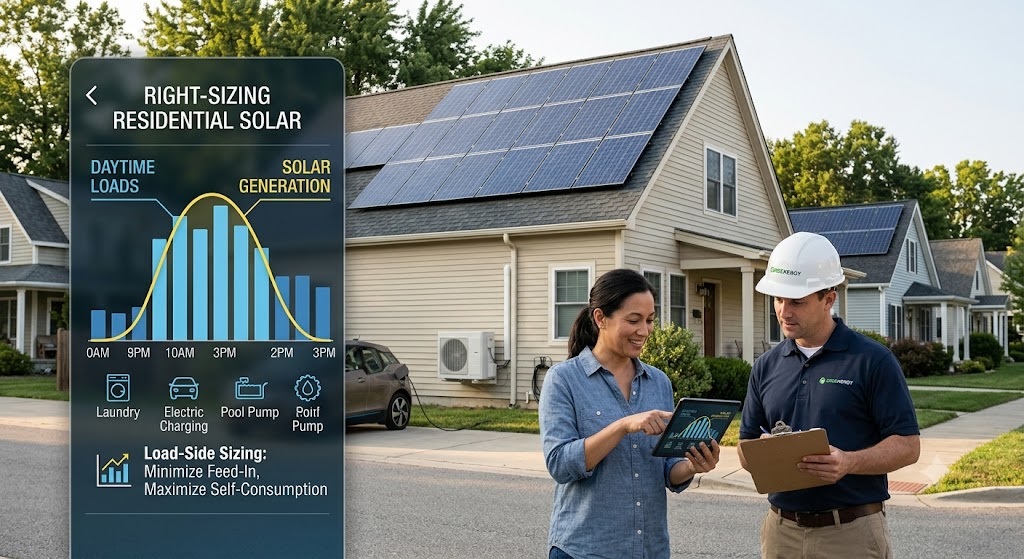
Solar electricity is most advantageous when it is used in the house at the time of its generation. By running the washing machine, the water pump, the air conditioning, or other appliances during the day, the homeowner can use the electricity generated by the solar panels right away.
This ability to consume the electricity generated by the panels is known as self-consumption. It is, therefore, more advantageous for the homeowner to have a slightly smaller system that meets the immediate needs of the house rather than a significantly larger one that generates more electricity than the house can use.
In many ways, this factor explains the importance of a good load calculation. If the pattern of consumption suggests that a significant amount of electricity will always be needed during the day, the best option is to purchase additional panels. It is advisable, however, to run some of the large appliances only during the day rather than at night, thereby extracting more value out of the existing panels.
Load Assessment Should Take Seasonal Variations into Account
The electricity consumption of homes rarely remains the same throughout the year. More air conditioning is needed during the summer, while heating consumes more electricity in the winter. Water heating, fans, fridges, and other appliances can impact the consumption pattern in different ways during different seasons of the year.
The same applies to the power generated by the solar panels. Seasonal variations, weather conditions, and overall daylight hours affect the capacity of the installation throughout the year. A good understanding of the general pattern of electricity consumption can, therefore, be vital when installing a residential solar system. An average monthly or daily electricity bill can provide the basic information, but a few months’ worth of electricity consumption data can be invaluable in understanding the general tendencies of a home’s electricity consumption. Thus, a family that consumes significantly more electricity in the summer than in the winter will require a different approach to a house that has a relatively stable electricity consumption throughout the year.
Battery Storage Can Add Another Layer of Complexity
Battery storage can make a significant difference to the overall capacity of a residential solar installation. When there is no battery, the extra electricity generated by the solar panels has little or no value, as it can neither be used nor stored. Generating extra electricity may, therefore, be a waste of resources unless the electricity can be exported and sold at a reasonable price.
The battery, however, adds another layer of complexity to the residential solar system. Apart from the additional cost, batteries also require additional space, regular maintenance checks, and occasional replacements. Unless the battery is needed to provide the electricity during the night, a larger installation may not be worth the effort and the investment.
This is where the load assessment becomes even more important. If the house uses a significant amount of electricity during the evening, the value of the battery and a potential larger installation increases. If no electricity is needed at night, however, the additional battery may not be worth the additional cost. It is, therefore, essential to consider the particular circumstances of the homeowner, rather than simply recommending an upgrade to a larger installation.
The Practical Limitations of the Rooftop Should Not Be Ignored
While it is easy to think that the more panels, the better, the physical limitations of the rooftop should also be taken into account. First and foremost, the panels need to be properly spaced and secured to prevent fires and other safety hazards. Second, the water tank, air conditioning, chimney, and other components can occupy a significant part of the roof, making it impossible to install solar panels on them. Third, a larger rooftop also means increased shading risks due to the local climate and the position of the sun. Finally, any planned future developments should also be taken into account before investing in a larger residential solar system.
A Practical Design Approach
A thoughtfully designed Residential Solar Rooftop System usually involves a simple set of steps. So, start by reviewing your electrical usage patterns over several months. Then, consider your electricity needs and consumption during daylight hours. After that, examine the roof’s orientation, shading, size, and the structure’s suitability for solar panel placement.
Next, it becomes possible to estimate the amount of electricity that the panels can generate and relate it to your needs. In other words, it becomes clear how much power will be delivered to the home, how much will go into the grid, and how much energy would need to be stored.
At this point, choosing the equipment becomes more meaningful: the capacity of the panels, the inverter, the mounting structures, protection and control devices, and the battery storage, if needed. The main advantage is that the decision is made not based on the available roof space but on the power that the future system will produce.
When a private home needs engineering and installation services for a residential solar energy system, Infrax Renewable offers renewable-energy products and solutions. Thus, their expert assistance can be helpful in determining the configuration, equipment, and installation details for the system.
A Good Rooftop Assessment Considers All the Options
Right-sizing a residential solar installation begins with an assessment of the electricity consumption and a load assessment. The former provides the general idea of how much electricity the home needs, while the latter establishes the value of additional electricity at the time of generation. It is advisable, therefore, to consider the roof space only after analyzing other, more important, factors.
For the load assessment, the homeowner can either use the electricity bill or analyze the home appliances and their power consumption. It is then possible to estimate how many panels would be needed to cover the daytime load in the home.
The load assessment data can also help establish the approximate size of the inverter, the configuration of the racking system, and whether the battery storage would be a viable option. If the homeowner intends to use the solar system for air conditioning or to charge an electric car, this should also be taken into account when planning the system. The larger the battery, the more electricity can be stored and used at a later time. At the same time, the larger the battery, the more capital is needed to finance the purchase and the ongoing maintenance.
In the end, a well-designed Residential Solar Rooftop System considers all the available options without trying to maximize any particular resource. If the homeowner plans on buying an electric car or a larger air conditioner in the future, it is possible to factor in the expected electricity consumption. It is advisable, however, not to overdo it and invest in a system that would be appropriate for the current needs rather than the potential future aspirations.
Conclusion
Larger rooftop, larger solar installation, increased electricity generation – it seems like the most obvious option when it comes to solar energy. A larger installation, however, is not always the best option when it comes to residential solar systems. A larger system can lead to additional expenditure, and the value of the additional panels may decrease significantly if the house has little or no use for the additional electricity. The best residential solar system, therefore, is the one that is right-sized rather than maximized.
A well-planned Residential Solar Rooftop System considers the electricity consumption of the house, the load, and the potential uses of the generated electricity. It uses information about the electricity bills or the power consumption of the appliances to establish the probable power needs of the house. This assessment can also help establish whether the roof space can be utilized fully or if a larger installation would lead to additional costs. It is also advisable to make provisions for future electricity needs if the homeowner anticipates an increase in power consumption in the future.