
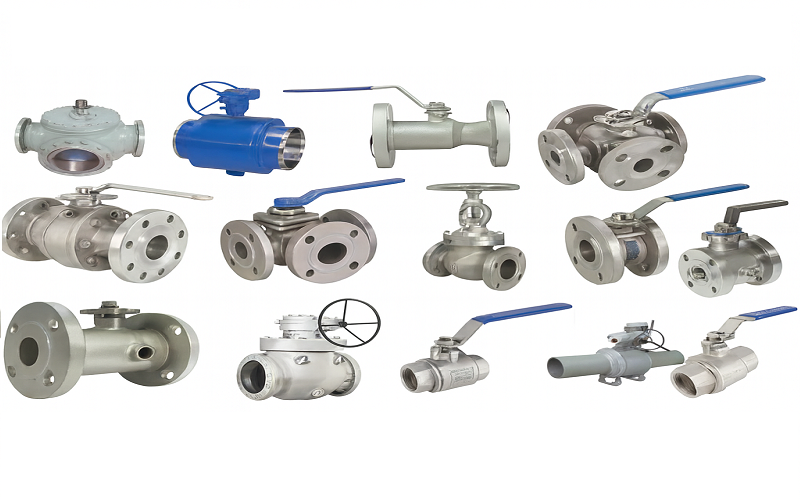

You could say that sourcing the perfect industrial component amidst the competitive manufacturing industry of India is like walking through a maze where making a wrong turn could put yourself in a hot and uncomfortable spot, quite literally. This is especially true when dealing with ball valve suppliers, where quality, certification, and reliability separate trusted ball valve manufacturers from risky options. I recall a time on a moderately warm day in 2018 when I was present at a chemical processing plant in Gujarat. We were introducing a new production line and despite the fact that almost all of our flow control units were top-grade, a major seal failed during the stress test. The reason? The batch of ball valves that seemed flawless on paper was manufactured by a foundry which didn’t consider metallurgical purity as an obligatory requirement but rather as a mere suggestion.
That instant gave me a deep insight into the workings of the Indian B2B market: certifications are just the basic requirements, but trust and technical openness can be considered as the highest level. When you are searching for how to choose the right ball valve suppliers for your industry, keep in mind that by buying a valve, you are not only buying a piece of equipment but also the guaranteed functional reliability of your entire work unit.
The Evolution of Indian Valve Market
In fact, the Indian ball valve market has totally changed from being a small player’s sector dominated by “small scale workshops” to becoming a global player with a valuation of nearly USD 477.5 million by the year 2025. With the “Make in India” initiative and a massive 6.96% projected CAGR through 2031, you are spoilt for choice. However, growth always brings clutter. You have the big names like L&T and Kirloskar, but you also have very tech-savvy players in Ahmedabad and Mumbai who can offer you specialized, IIoT-ready solutions.
So, how do you make up your mind?
- Start with the “Iron Triangle”: Application, Media and Environment
Even before you start looking up a supplier on the Internet, you must be very honest about what the valve will be subject to. The thing is that valves used for handling drinking water supply in a municipality are a completely different thing from ones used for handling very abrasive slurries in the mining industry or very high pressure steam in a power plant.
Know exactly what your parameters are:
- The type of media: Is it corrosive, viscous or gaseous? For very aggressive chemicals, you will have to go for stainless steel (SS316) or even lined valves.
- Pressure and temperature: Giving only the “mean” is not enough. You should also state the highest values. This will help determine whether you need a floating ball type for general isolation or a trunnion-mounted valve for high-pressure, large-diameter lines.
- Frequency of cycles: How often does this valve open? High-cycle uses require special stem seals and seats made of wear-resistant materials.
- Metallurgy Check: More than just MTC
Material Test Certificate (MTC) is usually your primary means of verification in the Indian market, but it definitely shouldn’t be treated as the only one. There have been times when the MTC has claimed top grade carbon steel, but in reality, the casting had defects that resulted in very fast pitting.
In the discussion of how to choose the right ball valve supplier for Your Industry, find out whether the supplier has a foundry of their own. Usually, a company like S S Cast Valves Pvt. Ltd. that is involved in every stage from the pour to the final machining is above the rest. Outsourcing the castings to disorganized third parties is how the metallurgical “lottery” occurs and these companies keep it to a minimum by doing every stage themselves.
Pro Tip: Don’t hesitate to request a Positive Material Identification (PMI) report for critical batches. A supplier who is reluctant at this point should be a red flag that you must pay attention to.
- The Certification Confusion: API, IBR, and the Rest
Some people complain about getting “alphabet soup” fatigue at the very mention of certifications. However, what one must understand about the Indian industrial sector is that some stamps are actually non-negotiable.
- API 6D: This is the most important level with respect to pipeline valves. If you are working in the Oil & Gas sector, then it is unthinkable that you should be looking at a supplier that does not have this certification.
- IBR (Indian Boiler Regulations): A valve used for steam or high-pressure water connected with a boiler system must definitely be IBR-approved. Novel Valves recently presented India’s first IBR-approved 3-way ball valve that is a really important factor in process flexibility in steam systems.
- Fire Safe (API 607 / 6FA): This is a must for flammable media as it guarantees that the valve will continue to leak even when the soft seats have been melted away by fire.
- Engineering Support: Are They Partners or Order-Takers?
One of the biggest mistakes that B2B buyers do is to treat a valve as though it were a commodity, essentially, like when buying a pack of nails. Actually, that’s not the case. A good supplier would be your consultant.
We had a case when the procurement team wanted to do a cost cutting by ordering the reduced-port valve which was 15% cheaper. They did not realize that the pressure drop was going to be so severe that there would be the need to upgrade the pumps, which would cost ten times more than the “saving”. Any top level manufacturer such as Metflow Engineers or Rapid Controls would have notified to that straightaway.
Keep an eye open for these “Partner” traits:
- Are customizable: Custom trims, anti-static designs, and extended stems for cryogenic service are some of the customizations.
- Automation experience: As India is on its way to becoming “Smart Factories”, valves should be actuator-ready. Find out whether the supplier can provide the entire package, valve, actuator, and positioner, all tested as a single unit.
- Sizing help: Engineering software is available to compute the correct $C_v$ (flow coefficient).
- Lead times and after-sales services investigation
“Time is Money” is more than just a saying in the Indian industrial sector, sometimes, it can mean the difference between profit and loss. One delayed valve could even halt a multi-billion EPC project.
When you research how to choose the right ball valve supplier for Your Industry, take into consideration their stock of “standard” sizes (1/2″ to 4″) as well as their turnaround time for larger trunnion valves (6″ to 48″). Ahmedabad and Mumbai are the major hubs, and suppliers there often come with better logistics for India-wide and export deliveries.
After-sales Team Questions:
- Do you keep stocks of critical spares (e.g., seats, seals, stems) for the next 5, 10 years?
- Are you able to provide on-site commissioning support for automated units?
- What are your policies with respect to “DOA” (Dead on Arrival) units or field failures?
- Total Cost of Ownership (TCO) vs. Initial Price
In an ideal world, the “lowest bid” should not be a winner and contract holder in India, only to come back and lose out because of maintenance and downtime.
Imagine a valve costing 20, 000 INR but lasting 10 years without a leak; this is nothing but a regular price in comparison to a 12, 000 INR valve that needs its seal replaced every 18 months.
Always keep in mind the energy-saving aspect. A full-bore valve produces a lower pressure drop and therefore pumps do not have to work as hard. Thus, after 5 years of continuous operation, that energy saving can actually pay for the valve itself.
- The Global Perspective: Export Quality at Home
The best way to evaluate an Indian supplier is by checking their export track record. Exporting goods to the UAE, Germany or USA is becoming a regular practice for a company. Only if a supplier has these export experiences, he is really abiding by the international quality standards like CE marking and ATEX. Companies like Perfect Engineers or L&T Valves etc. have the robust global footprints because they never compromise on the documentation, they have the MTCs, hydrostatic test reports, and gas test certificates readily available for international auditors.
Concluding Remarks: Use Your Instincts, but Also Get the Data
You are basically juggling when selecting a supplier. On one hand, you need strong technical expertise of a manufacturer who is aware of metallurgy. On the other hand, you also need the strategic intelligence of a partner who knows your process.
Hey, it really looks like we often make the “buying” as complicated as possible and conduct too little research on the “performing”. Scheduled site visits especially for big contracts can be very assuring when finalizing How to Choose the Right Ball Valve Supplier for Your Industry. You can check out their testing lab. Witness a hydrostatic test run. Manufacturers who really love their shop floor will be very much ahead with the presentation.
Keeping in mind quality, certifications and long-term engineering support helps you turn what could be a point of failure, into an element that would silently carry the success of your operations.
Now, get to work and source your valves with confidence, the future of your project is hanging on those quarter-turns.


