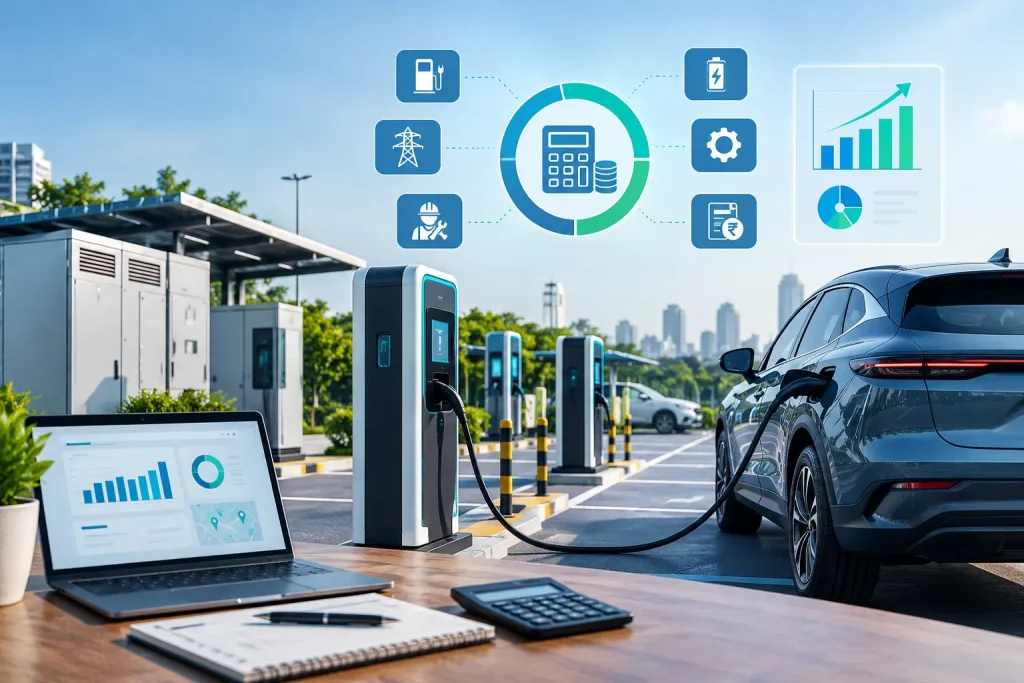

Have an EV charging solutions provider show how a driver locates the right parking bay, begins charging, pays, and receives assistance in the event of a charging halt. That testing should be done when a pilot is operating on the completed site. Initial sessions for an electric charging station franchise should demonstrate the interplay of the equipment, software, payment flow, and property staff. Discuss with the provider what types of scenarios they will be testing and what evidence you should get before you can open to regular customers.
An EV Charging Solutions Provider (CSP) should prove that they can, at the very least, make the following contributions:
Begin with someone who has never been to your station and provide them with the public listing. Direct them to the proper entrance, locate the charger, and choose the proper connector. Use a regular cell phone and a vehicle that is anticipated to be used by the station. Note how the driver is looking for assistance, where there are unclear instructions, and how long before they reach a successful start.
Do the same activity at another time of day. One of the testers during business hours may have gone through a gate that has a closing time. Poor mobile reception at the bay may also be experienced from a charger in the basement. Just ask the provider what other payment and start options are available at your site and if they are. Improve the list and signs to reflect driver capability on site.
Document the session, from beginning to end.
Verify the charging rate and other charges with the tester before you begin. Follow the session from authorisation, ongoing charging, completion, and exit. Request a receipt and verify that it specifies the location, amount, and session. Compare with the operator’s platform record. If multiple bays are open, perform test sessions in at least one of the bays and verify labels are correct for the app and support desk.
Run a test to see what happens if you don’t charge.
If it’s done successfully, it takes one path. Create a small list of events that the site will be subjected to on a daily basis and decide who will simulate each of these events. Allow the provider/installer to conduct any technical test requiring access to equipment or software. The host can watch the driver’s experience and check the logbook.
Scenario
- Evidence to collect
- The driver chooses the incorrect charger.
- A pop-up screen of confirmation and directions to correct the selection.
- A payment is approved, but the charging does not begin. Payment is approved, but charging does not start.
- Payment state, helpdesk reference, and any reverse record
- If the session ends too soon, it is considered normal.
- A message to the driver, energy record, final bill, and reason displayed to the driver
- A charger is not available.
- Change in public status: process and alert to host.
- A receipt is required to be reissued to complete a session
- The way in which support finds and validates the transaction
It is crucial for a payments team to be able to tell the difference between a card authorisation hold, a captured payment and a refund. Inquire with the provider if there are any circumstances that apply to each of the accepted methods of payment. Customer case flow from the customer screen to the payout report. If it’s a different company handling the payment and charging platform, agree with your team which one should respond to the driver.
Examine the operator’s view on an interruption
Inquire with the provider of the alerts, who gets them, if the helpdesk can correlate a complaint to a charger and session. If the equipment and software are provided by two different vendors, ensure that the selected equipment versions are tested with the software versions. Open Charge Point Protocol (OCPP) is a protocol that describes communications between the charger and the charging management system. Inquire about the functions they are able to offer on the equipment provided for the site. Open Charge Alliance
Provide the driver briefing by those who will be meeting the drivers.Brief the Staff Who Will Meet Drivers First.
Guards or parking staff are likely to be among the first people a lost visitor may approach. Create a short guide including the hours they are open, the fee, bay numbers and support contacts. Have staff indicate the charger and tell them what occurs if a car blocks a bay. Provide staff with an easy method of reporting any sign, listing or parking issue that they may see as a problem and allow them to direct the reporting issue to the appropriate party to resolve it.
At a retail location in the city, testers during the day complete the payment process while testers during the evening are instructed to go through a closed gate. The directions in the app can be corrected by the charging operator. Parking team may alter or explain evening parking instructions. Test to see if the journey has changed after the modifications, and confirm hours work for a customer close to closing time.
Invite shortlisted providers (e.g., EarthtronEV) to show the driver journey and the instructions on how to report access, billing and charger problems.
Set a clear opening decision for the site.
Record a Pass, Fix Required, and/or Fix Deferred with a reason mark on each test. Prioritize failures related to access, customer billing, and session completion. Determine an owner and date for retest. Take pictures of end-of-life signs and keep a representative receipt with the test log. If the customer complains about the issue later on, this can assist the operator and the host to go through the identical evidence.
Following the opening, have a look at what has already been done, what failed and how many support cases there are. Examine the first complete week that shows the site’s typical pattern of operation. Look at the tickets before deciding which to repair. Some common access complaints may be more useful than a count which adds all complaints together.
Set someone to take responsibility for public hours, directions and fees. If the change is identified in a test, get that owner to review the listing, signage and staff instructions together. Note changes made and when they will be in effect, particularly if there is a temporary entrance or tariff.
Open once the whole service works.
When looking at an electric charging station franchise, allow drivers to personally experience the true site entrance, parking bay and payment systems touted for the site. Gather evidence to verify that charging sessions and exceptions are reflected in the records that support and finance use. The station is much easier to keep after it is opened, if the host is aware of who is responsible for each issue and how the issue is addressed.
Frequently Asked Questions
Should a pilot use public customers?
Start with invited testers who can report the complete journey. Once the main steps work, a limited launch can show how the experience holds up with first-time users on normal routes.
Can the host accept a station if one bay still fails?
Agree what can be opened separately and how the provider will mark the failed bay as unavailable. Record the outstanding work before approving the part that is ready.
Who checks parking and charging receipts?
Give finance staff a sample of both where separate fees apply. They can check how the charges are explained and where to send a customer who disputes one of them.
Can we test a payment refund before opening?
Ask the provider and payment team for an agreed test method. Verify the customer message, the restoration of funds where applicable and the accounting record.
What should we record if a tester needs help?
Note the time, location, charger or bay number, the step that failed and the outcome. Use those details to reproduce the issue and make the next test specific.