
Sometimes solar panel installations are designed as a neat proposition – install the array and cut electricity costs, leaving an institution with a steady source of power. However, the array is only a part of a broader system in which the budget for replacements, parts, inspections, and technical support could dry up when the project closes.
A solar system can continue to generate electricity with little maintenance for years, but when the installation is off-grid or hybrid, the loss of any one component can render the entire project useless for its intended purpose.
Why Project Closure Creates a Maintenance Gap?
Project grants are usually designed with a specific budget and timeline in mind. It is easy to see why the capital part of the project, which buys the equipment, is prioritized over the recurrent costs, which fund operations after the project is over. When a school, clinic, community centre, or other institution receives a free solar array, they can forget about the ongoing costs of maintaining the system for as long as they use it.
Solar panel systems for NGOs and institutions require designing in such a way that their ownership and use continue beyond the date of the project closure, which may include provisions for operations and maintenance.
Batteries Often Pose the Biggest Challenge
Battery storage adds another layer of complexity to the system, as their lifespan is usually shorter than that of the rest of the equipment, and their operation depends on a wide range of factors. While photovoltaic panels can be expected to last several decades with proper maintenance, the inverter, battery storage, and related components have a shorter service life.
The way batteries are used also impacts their longevity – the depth of discharge, temperatures, and the way the current is used (constant or pulsating) all affect how long the battery will last. In a system that is supposed to be independent, the failure of the battery bank can prevent the facility from using any of the solar electricity generated during the day.
When the project has a hybrid inverter, the loss of stored energy may cause it to rely more on the utility grid or the backup generator. The cost of a battery replacement is usually significant, as the new battery bank has to have an equal or greater voltage and capacity to the one being replaced.
The replacement also depends on the technology used – lithium-ion, lead-acid, and other types of batteries differ in weight, size, and required support equipment. If the new technology does not allow the use of the same inverter or charge controller, it may be necessary to redesign the system. A grant that covers the cost of the initial battery but not the replacement down the line can create a burden for the institution.
Solar Projects Fail Because of Smaller Issues Accumulating
Issues within a solar system rarely appear in an instant – first, one component begins to malfunction, and then others are affected. Dirt on modules can reduce the efficiency of the entire array, while loose contacts can damage the electronics in the junction box or cause a drop in voltage. If the array is not cleaned or the contacts are not tightened, the problems will persist, reducing the yield.
Inverters can fail, and fuses, breakers, or fans can stop working. The lack of preventative maintenance means that a problem occurring gradually goes unnoticed until it becomes large. If the cooling system of the inverter is not maintained, it may overheat and shut down frequently. A damaged or poorly maintained cable can be a fire hazard and a mechanical obstacle to accessing other components.
System maintenance budgets should be designed in such a way as to include regular inspections, servicing, and diagnostics of the equipment. They should also include provisions for the replacement of components such as breakers, fuses, junction boxes, and others. The goal of the maintainer is to identify and mitigate issues before they arise.
The Hidden Cost of Unfunded Solar Projects
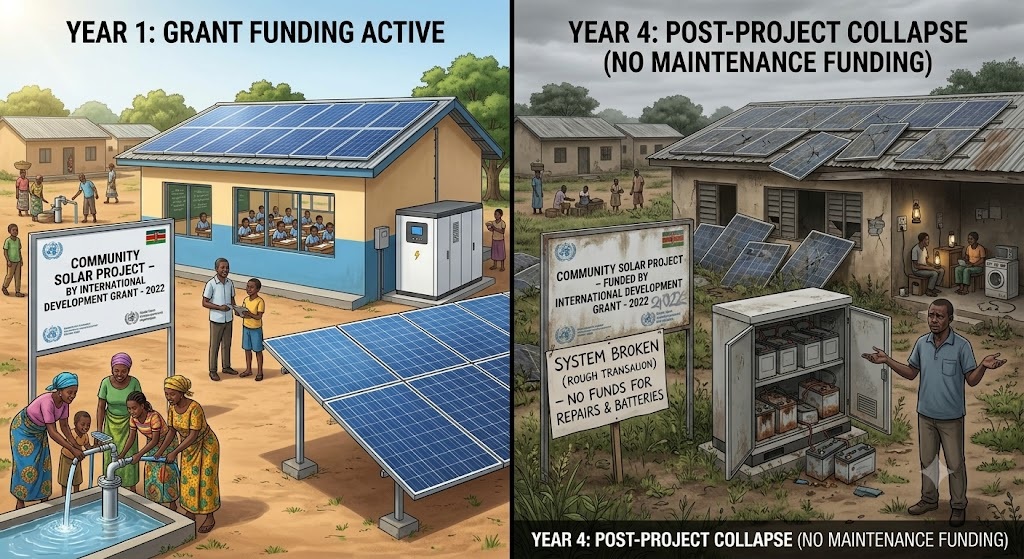
When the grant is completed, the institution that received it has two options: continue to maintain the facility with its own funds or let it go into disrepair. The latter option is tempting because it does not require additional expenditures until something breaks.
The costs of deferred maintenance can add up when multiple components require replacement at once, and the system continues to function at a lower level than intended. Subsequently, the electricity generated by the array may not be enough for the needs of the facility, while it continues to incur costs associated with its presence on the balance sheet. In addition, the loss of power for even one day can be enough to require calling a technician and purchasing electricity from the grid.
When the solar system is not generating the expected amount of electricity, the costs can be difficult to identify. If the site is not monitored regularly, it can be challenging to say with certainty whether the yield has decreased or whether there was a change in consumption. The budget of the organisation must also consider the losses from having to use more expensive electricity from diesel generators or the grid when the system is unable to provide the necessary amount.
Design for When the Project Closes
Planning for the future should begin when the equipment is purchased. The budget should reflect the true costs of ownership, including a maintenance reserve, battery replacement costs, inverter costs, and any other components with a limited-service life.
As part of the handover upon project completion, a member of the receiving organisation must understand their responsibilities in case of a malfunction and have the tools and training to identify and report an issue. Larger projects may require a service contract that entitles them to a discounted price on repairs and replacements. Remote monitoring can be used to detect problems before they occur, but it requires the infrastructure to be in place and operational.
A Practical Lifecycle Assessment
An assessment of the system and its components should be conducted with an eye on the period after the project is completed and the hands-over to the organisation. It may be necessary to stipulate in the contract with the supplier that the equipment comes with a guarantee, and there are channels through which the organisation can obtain the necessary technical documentation and conduct training.
It should be possible to plan ahead for the time when components with a limited-service life will need to be replaced. If the lifespan of a particular component, such as a battery, is known with a reasonable degree of accuracy, it is possible to set aside funds for its replacement in the future. Infrax Renewable LTD. can help the client prepare a lifecycle budget that allocates funds for equipment purchases and maintenance.
What a Closure Plan Should Entail
Before a grant-funded solar project is officially closed, its beneficiary should prepare a set of documents, which will constitute the handover package. At a minimum, it should contain the following information:
- Equipment specifications, schematics, manuals, warranty records
- Maintenance schedule, including recommended inspections, cleaning, tests, and servicing.
- Technicians’ contact information, as well as equipment suppliers’ details.
- Battery and inverter replacement policy.
- The funding source for maintaining and replacing components.
- Operating procedures and troubleshooting guide.
In this way, the above-listed document set will transform a donation into a self-sustaining operation with a clear owner who can be held accountable.
Conclusion
While grant funding may provide the necessary capital for institutions to acquire solar power, the question remains about the project’s viability after the grantor ends its financing. Panels, batteries, and inverters call for distinct maintenance and replacement procedures.
A project fully funded but considering the operational expenditures only partially covers the solar system’s cost. Thus, reserves for battery replacements, predictive maintenance, technical support, personnel training, and system replacements should be designed as regular expenses, not additional investments.
For Solar panel systems for NGOs and institutions, lifetime cost determines the system’s viability, not the initial investment. Therefore, defining lifecycle costs and responsibilities at the outset of the project can ensure the solar asset will remain in service long after the grant has been allocated.