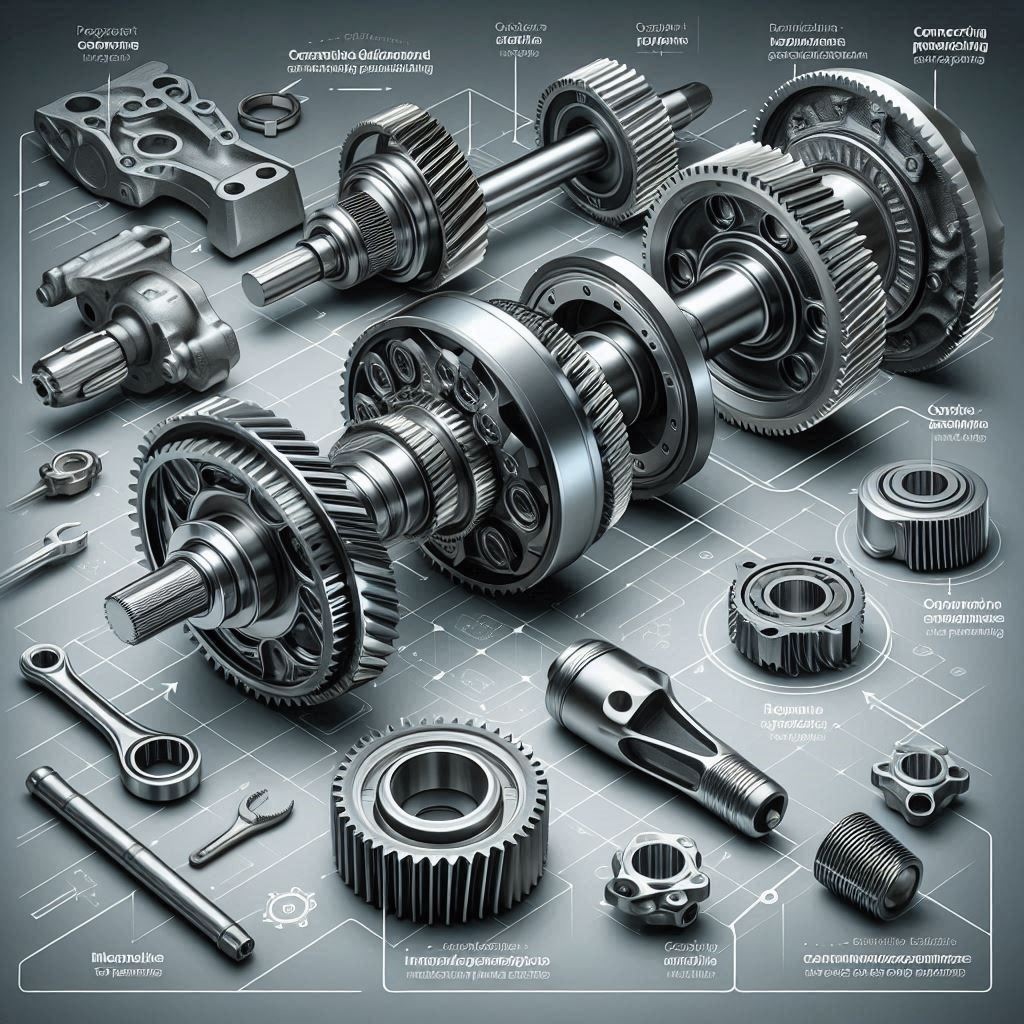

Forged automotive components have become one of the main reasons why many cars, trucks, buses and two-wheelers keep running for years on our rough roads without frequent breakdowns. Parts such as connecting rods, crankshafts, steering knuckles, axle shafts, wheel hubs, transmission gears, suspension arms and drive shafts made by forging simply take more punishment than cast or plain machined pieces. Vehicle makers use forged automotive components because these parts face the real daily beating ā€” potholes, speed breakers, heavy loads, sudden braking and engine vibrations ā€” without cracking or bending easily.
In normal running a vehicle faces thousands of small shocks and twists every day. Forged automotive components handle this hammering better because the forging process changes the inside structure of the steel. The hot metal gets squeezed hard in dies, so the grain lines stretch and follow the actual shape of the part instead of running straight across. This natural flow makes the component stronger exactly where the force hits hardest. That is why trucks fitted with forged automotive components in the driveline often cross three to four lakh kilometres with fewer surprise failures.
Grain Flow That Stops Cracks from Spreading
The strongest point of forged automotive components is the way the grain flows during forging. When a hot steel billet is hammered or pressed into shape, the grains get pushed along the length and curves of the finished part. In a forged connecting rod the grain lines run smoothly from the big end through the shank to the small end without any sharp breaks.
On bad roads or when carrying overload, small cracks usually start at the surface or at places where thickness changes suddenly. In forged automotive components these cracks hit strong grain lines that slow them down or stop them. Fleet operators report that forged connecting rods regularly last 3 to 4 lakh kilometres in diesel engines before showing real wear. Crankshafts made as forged automotive components survive millions of firing cycles without developing cracks at the journals or fillets. This extra fatigue resistance is what keeps engines running reliably even when drivers push hard every day.
More Strength from Less Metal
Designers always try to reduce vehicle weight for better mileage, but they cannot make parts weak. Forged automotive components help here. Forging squeezes out air pockets and packs the steel tightly, so the finished part becomes stronger than a cast piece of the same size and weight.
A forged steering knuckle can be made lighter than the older cast type while still passing the same heavy impact tests. Lower unsprung weight (knuckles, hubs, control arms) also gives smoother ride and longer tyre life because the wheels follow road bumps faster. At the same time the higher strength means the part does not crack when the vehicle hits a deep pothole or carries extra load.
Shock Absorption on Rough Indian Roads
Our roads, village tracks and highway speed breakers throw sudden hard knocks at vehicles. Forged automotive components absorb these shocks better than castings. The dense metal gives higher toughness ā€” the part can take a heavy blow and bend slightly instead of breaking clean through.
Axle shafts and propeller shafts produced as forged automotive components often twist or bend a little under extreme load rather than snapping suddenly. This behaviour has saved many trucks from total failure when they cross bad patches at speed. In accident situations, forged automotive components in the suspension and chassis usually deform in a controlled way instead of shattering, which helps protect the people inside.
Uniform Strength from End to End
Cast parts often have different hardness in thick and thin sections because cooling rates vary inside the mould. Forged automotive components mostly avoid this problem. The whole part gets worked evenly under pressure and then heat-treated under controlled conditions, so hardness and strength stay almost the same from one end to the other.
This uniformity is very important in fast-spinning engine parts. A forged crankshaft or connecting rod made from forged automotive components has no hidden soft spots, so the engine can run safely at higher power and rpm. Transmission gears produced as forged automotive components also wear evenly across the teeth and last much longer before the vehicle needs gearbox repair.
Surface That Takes Hardening Treatments Well
After forging, many forged automotive components receive extra treatments like induction hardening on gear teeth or cam lobes, nitriding on bearing journals, or shot peening on stressed areas. The clean surface left by forging holds these treatments nicely and keeps the hard layer intact for a long time.
Cam lobes on forged camshafts resist pitting even after long running. Wheel hubs made as forged automotive components show less wear where the bearing sits. Gear teeth stay sharp and quiet for more kilometres. All these small gains add up to longer service intervals and fewer workshop visits for the owner.
No Need to Make Parts Extra Thick
Because forged parts are stronger and tougher, designers do not need to add extra thickness just to be on the safe side. This also helps keep the weight of the cars low without compromising on the strength of the parts. Every kilogram that can be saved in the parts of the cars makes the cars a little more fuel-efficient and the tires and brakes a little less strained. This may even mean a little more payload for the cars in the case of commercial vehicles.
What Happens in Daily Use
Fleet owners running long-distance trucks and buses say vehicles with forged automotive components in critical areas need far fewer emergency repairs. Car owners who drive regularly on broken roads report that suspension parts made from forged automotive components last almost double the time compared to cheaper cast versions. Even scooter and motorcycle makers have started shifting critical parts to forging because broken components create too many customer complaints.
Racing teams have known this for years ā€” almost every competitive engine and drivetrain uses forged automotive components because nothing else survives repeated hard use and heat.
Careful Process Behind the Parts
Good suppliers of forged automotive components watch every stage closely ā€” quality of the starting billet, exact heating temperature, how much the metal is reduced during forging, cooling after forging, and final heat treatment. Many now use computer flow simulation to catch problems before the actual die is cut. This careful approach removes most hidden defects before the part reaches the assembly line.
Long-term Money Savings
Forged automotive components may look a little more expensive when the vehicle is first built, but over the life of the vehicle they usually save money. Fewer broken parts, less downtime, lower replacement cost and reduced warranty claims make the total ownership cost lower for both manufacturers and vehicle owners.
Conclusion
The advantages of forged automotive components are that they make the vehicle more durable through continuous grain flow, increased strength in small sections, better fatigue and shock resistance, uniform properties in the part, and better response to surface hardening. This leads to vehicles that withstand daily rough treatment on our roads, last longer before needing repair, and provide their owners with greater satisfaction and safety. As the engines in vehicles become more powerful, the vehicles become lighter and the conditions under which they are used become harder, and forged automotive components in these vehicles are bound to remain even more important. The auto manufacturers who are currently using quality forged automotive components are merely making vehicles that are tougher and more durable and last longer with lower maintenance costs.