

Among all the highly specialized processes in manufacturing, investment casting holds an important place for producing complex and high-precision metal parts. It is widely applied to create very complicated parts with minimal post-processing; thus, this technique finds applications across many industries, ranging from aerospace to automotive, energy, and medical device manufacturing. Over the past two decades or so, investment castings India has grown to be one of the major players in this field due to ever-growing capability, technological advancement, and increased demand in global markets for high-quality and cost-effective solutions.
It also tries to position itself well for a better standing in the Global Investment Casting Market, thanks to its rich history in craftsmanship, a diverse industrial base, and competitive advantages from cost-of-labor perspectives. This article looks at the emerging dimensions of the investment casting industry in India, key players involved in this sector, challenges experienced so far, the technological novelties that have been noticed therein, and the potential contribution the sector might make to altering the face of global precision engineering.
Historical Evolution of Investment Casting in India
Its excursion into modern investment casting, however, only began in the middle of the 20th century. The Indian casting business was born out of old systems in metalworking; likewise, the indigenous foundry industry also found origin with roots in ancient metallurgical heritage, as represented most dramatically by the Iron Pillar of Delhi.
However, it was only after India’s independence in 1947, with the establishment of the public sector foundries and the promotion of industrial manufacturing, that investment casting began to gain prominence. At first, Indian manufacturers used basic methods of sand casting, but with the growth of industries, the requirement for more refined and precise components led to the adoption of more advanced techniques like investment casting.
This would begin in the 1970s and 1980s as a number of SMEs sprouted up to form India’s first investment casting sector. However, these early manufacturers were much more focused on the home market, producing components essentially for the automotive and defense industries. As demand for high-quality, precision-engineered components increased globally, Indian manufacturers continued to invest in technology upgrade and modernized techniques.
Nowadays, the Indian Investment Castings industry represents a growing niche that reaches multiple needs and currently produces highly intricate parts for Aerospace, Automative, Energy industries, amongst several others. On the bright note for India, present-day global investment casting marketplace has accorded the status to the Investment Castings sector of one of the internationally competitive players mainly because High accuracy &Cost-effectiveness will be availed.
Investment Casting Technology: Precise, Versatile, and Assuring Quality
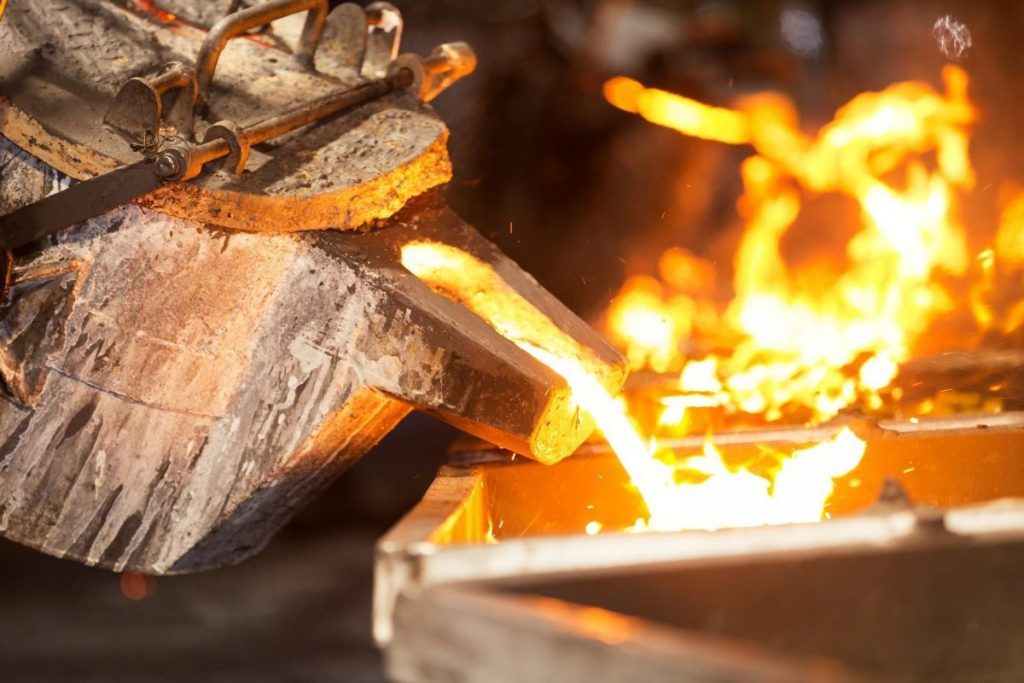
Amongst all the methods of casting available, the investment casting is a technique to create parts with such intricate geometrical features in combination with high-dimensional accuracy. Investment casting starts off by making a pattern commonly out of wax material. Next, the process entails its coating with a shell that consists of ceramics allowed to set on the core. Heat treatment for setting on the core will remove wax through a sintered mold which now yields to the core mold through which hot metal may be introduced. Molten metal is poured into the mold, solidifies, and then shell is broken away to achieve the cast part.
Some of the major reasons that make Investment Castings India a preferred solution in various industries include:
- High Precision and Complicated Geometries: Investment casting can make highly complicated shapes with tight tolerances as low as 0.1 mm, thus finding applications in the aerospace, automotive, and medical fields.
- Material Versatility: A lot of metals can be handled in the investment casting process such as stainless steel, carbon steel, aluminum, nickel alloys, titanium, and super-alloys. All these mean a great deal in many industries needing the use of materials in very harsh environments.
- Minimal Post-Processing: Since the casted part is very smooth and accurate, there is normally less machining and finishing for investment castings when compared to other casting processes. It reduces cost and shortens the production cycles.
- Cost-Effective Small and Medium Runs: Notwithstanding the fact that the cost of molds and equipment is a very huge investment, investment casting proves cost-effective during medium and low volume production because of its capacity to minimize waste in parts manufacture, with reduced requirements for secondary processes.
This has facilitated an increasing interest in investment casting, not only within India but also among developing countries. Modern technologies such as 3-D printing of patterns, CAD, and CAE have further achieved the capability for Indian manufacturers to produce even more sophisticated components.
India’s Role in the Global Investment Casting Market
Recognised by the world market because of Indian competitive pricing and growing manufacturer sophistication, the Indian Investment Casting Industry has come into force. With its well-established infrastructure and skilled manpower supported by ever-grooving technologically advanced foundry capacity, the country today has emerged as a recognized supplier of precision-engineered components.
A few factors have contributed to strengthening India’s position in the world market:
- Labor Cost Advantage: A big factor in driving the growth of investment casting within the Indian shores is the strategic labor cost advantage that India possesses. Manufacturing in this country will be way cheaper as compared to developed nations and hence is a very viable option for many firms seeking to reduce their operating costs without having to sacrifice quality, for which their brands stand.
- Government Initiatives and Support: The Indian government has recognized the potential of the investment casting sector and, through various initiatives like the “Make in India” campaign, promotes local manufacturing and industrial innovation. Financial incentives, infrastructure development, and enhancement programs for skills have encouraged domestic and foreign investments in the sector.
- Skilled Workforce and Engineering Expertise: India has a great pool of engineers and technicians, most of whom are trained in the latest methods of manufacturing. This has resulted in increased capacity within the country for the manufacture of quality, precision castings for customers worldwide. The universities and technical institutes in India are focusing more on special areas like materials science, robotics, and manufacturing engineering, thus contributing to the country’s competitive edge.
- Global Demand for Aerospace, Automotive, and Defense Components: Indian companies manufacture parts for aerospace, automobile, and defense industries, commanding exceptionally good niche with high precision and fine quality standards. Investment casting is imperative for such industries where part performance has to live up to the most rigid standards. India’s share of the global aerospace supply chain has grown steadily in the recent development of the region, thereby increasing the demand for investment castings.
- Access to Raw Materials and Energy: Easy availability of raw material like steel, aluminum, and other non-ferrous metals is assured in India. This helps during the process of investment casting. The low-cost availability of raw material coupled with increasing energy efficiency makes the overall operation of investment casting very economical to offer a solution for its customers globally.
Investment Casting in India – Problems and Prospects
While India has done a lot in positioning itself as a hub for investment casting, some challenges may still impede the progress of this sector. Some such challenges are:
- Technological Upgradation: While India has considerably acquired newer casting technologies, substantial continuous investment in R&D and latest technologies like Additive manufacturing (3D printing) and automation are required to maintain competitiveness in the world.
- Assuring Quality and Compliance to Standards: While the demand for precision castings is on the rise, quality consistency is still a matter of utmost concern. It would be very challenging at times for Indian manufacturers to follow some strict international standards like ASTM, ISO, and AS9100 regarding aerospace applications.
- Supply Chain and Logistics: Most of the infrastructure in India, especially when it comes to logistics, is a big bottleneck toward delivering components on time. This leads to delays in meeting international client demand and may undermine the competitiveness of Indian investment casting manufacturers.
- Skilled Labor Shortage: There was a large pool of engineers and technicians, yet in the precision casting industry demand was much higher than the number of people available. Often it was difficult to find people and retain employees for highly specialized positions.
Despite these, there are ample avenues of growth for Investment Castings India:
- Growing Markets: Due to the industrialization going on in global markets like APAC, Latin America, and Africa, the demand for castings will grow. To address this growing demand and make use of the opportunities resulting from it, Indian producers are required to build strategic partnerships along with global expansions.
- Digitalization and Automation: The integration of smart manufacturing techniques, such as IoT for predictive maintenance, AI for quality inspection, and robotic automation, will definitely enhance the efficiency and quality of investment casting operations in India.
- Entry into New Sectors: India has a great scope to increase its presence in medical devices, renewable energy, and machinery industries, showing increasing demand for complex and high-precision casting.
Conclusion
The art of investment casting has been important in the industrial development of India, positioning the country strategically in the global precision engineering supply chain. As industries worldwide continue to raise their requirements for higher precision, durability, and material versatility, the Indian investment casting sector is well-positioned for substantial growth.
Due to its technological advancement, cost-effectiveness of the labor force, and governmental support, India has become their preferred destination for investment casting solutions across various industries: aerospace, automotive, defense, and energy. Yes, challenges are there, but the future of the Investment Castings India is bright with a host of expansion and innovation opportunities.
With the redefinition of global supply chains and increasing requirements for precision components, India will further its position in the investment casting market and thereby be an indispensable player in the global economy.
FAQs
- Why is India a growing focus for investment casting?
Today, India has emerged as the most viable investment casting hub with key advantages in labor costs, skilled manpower, and supportive government initiatives to manufacturing coupled with an increasing capability for the production of high-quality precision-engineered components for worldwide markets.
- What industries in India does investment casting benefit from?
Some key industries where investment casting finds applications include aerospace, automotive, defense, medical devices, energy, and industrial machinery in India.
- What are the advantages of investment casting?
Some of the major advantages with the investment casting are that it offers complex geometries, high geometrical accuracy, wide material utilization, and fewer post-operations. It is reasonably economical for runs in media and low volume.
- What are the problems in the investment casting sector in India?
The Indian investment casting sector faces a number of challenges related to technological upgradation, quality control measures, supply chain bottlenecks, and the demand for skilled labor. Still, the sector is potential for high growth.
- What are the advantages of investment casting compared with other methods of casting?
Among all the casting methods, it offers better accuracy, more geometrically complicated shapes, and less material waste compared with other techniques such as investment casting, sand casting, or die casting. In addition to that, investment casting is one of the casting methods suitable for producing high-quality component parts with very little finishing and a fine surface quality.
- Can investment casting be used for mass production?
Although most in common practice, investment casting does the job for small up to medium volume production batches; it is also the ideal technique for mass manufacturing for industries that require an elaborately detailed and complicated finished piece-part, such as spacecraft, aircraft, and aerospace sectors, and automotive. Steps towards modernizing the process through effective use of automation and general optimizing are making larger run-size batches increasingly feasible and even practical.


