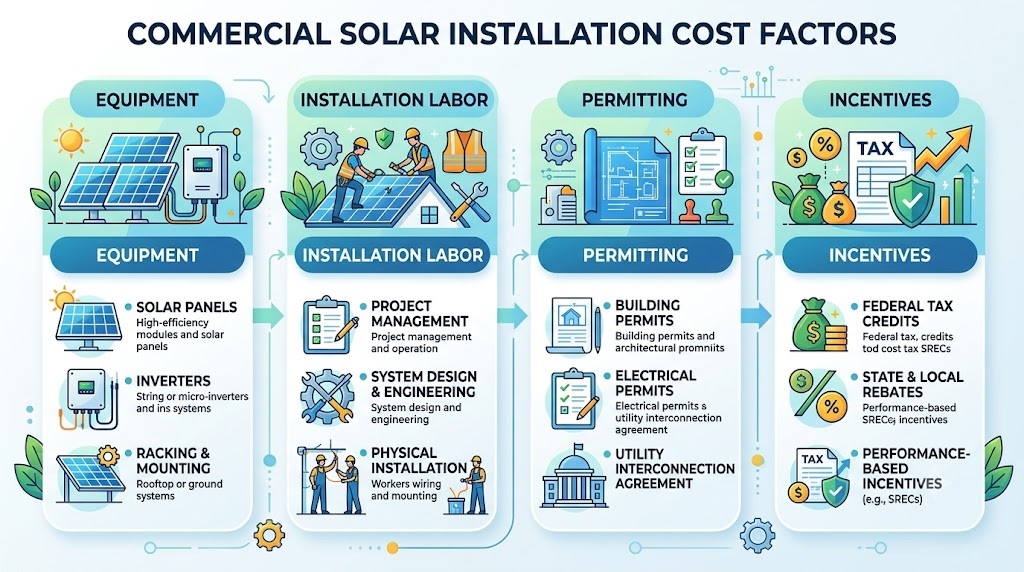

Commercial buildings usually have big rooftops that can accommodate solar panels instead of leaving them empty. Solar panels turn sunlight to turn it into electricity and can help save on electricity costs and provide backup power as well with the use of batteries. Before the installation of solar energy for commercial buildings, businesses need to consider some of the following economic factors such as the available rooftop space, daily energy consumption, solar system production capacity, solar panel efficiency, battery capacity, inverter capacity, installation and maintenance cost as well as the time and efficiency of the energy conversion process. Besides, businesses need to assess how well they connect to the electrical grid, their future electricity demand and return on investment and the best possible solar system yielding least cost of energy production.
How solar energy for commercial buildings can be a game changer?
Solar energy has the potential to change the game for commercial buildings by lowering energy costs, saving energy, and contributing to a clean environment. Businesses have the option of putting panels on rooftops and taking advantage of energy accumulated at daytime for use in running their offices, equipment, and facilities. Excess energy produced can be accumulated and used at night with the right battery system for running lighting and security system along with normal operations that are essential. This means less reliance on grid electricity while allowing businesses to cope with power cuts and increasing energy charges. Making solar installations on commercial building rooftops not only makes better use of unutilized rooftops but also cuts down on carbon footprint and saves energy. By installing solar panel system in commercial building we can maximize the comemrcial property value, reduce the electricity cost significantly, save power grid supply, get opportunity to avail government subsidy as well.
Why do we need solar energy for commercial buildings?
Commercial properties benefit from solar energy since electricity bills can be lowered, dependence on traditional electricity source can be diminished, and green business operations can be established. Commercial buildings are ideal for solar panel deployment because they usually have a lot of surface where solar panels can be mounted. Thanks to modern technology, solar energy can be used to power various equipment, including lighting and office computers. Batteries allow business people to keep using solar energy during blackout or at night time. The use of solar energy provides companies with a possibility to respond to rising electricity prices, and minimize the negative impact on the environment.
Conclusion
To sum up, the process of setting up solar power equipment in a business establishment involves proper assessment of costs incurred, energy usage, available roof space, efficiency of solar panel, battery storage, and inverter capacity. A suitable option from available solar options will not only help the businesses in cutting down their electricity costs, but will also ensure steady supply of power and optimum use of space on the roof. Additionally, the solar option will reduce the emission of carbon dioxide and dependency on power grid. Even though installing solar equipment requires considerable initial spending, it would be compensated by future reductions in energy use in the commercial premises.